Showing posts with label Emily Dickinson. Show all posts

Wednesday, June 12, 2013

The choice of reclusion. Adrienne Rich - and me - on Emily Dickinson


"I am travelling at the speed of time, along the Massachusetts Turnpike. For months, for years, for most of my life, I have been hovering like an insect against the screens of an existence which inhabited Amherst, Massachusetts, between 1831 and 1884." 
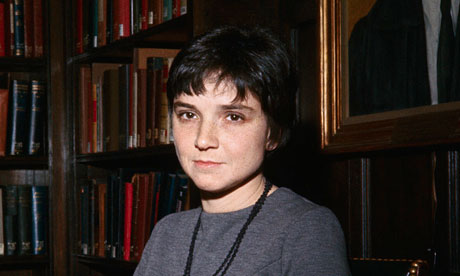

Thus starts the essay on Emily Dickinson written by Adrienne Rich. She, as I have done myself, sees Dickinson as someone who chose living withdrawn from the rest of the world. In order to write, or simply to have a freedom most women of her time did not have.

In a way, Jane Austen did something of the same, refusing a proposal (by a man she couldn't really stand, though), and Søren Kierkegaard (happy 200 years!) who broke his engagement to his fiancée called Regine, causing quite the scandal in 19th century Copenhagen. In order to work and write, he saw this as necessary, although painful. In our day we want it all.

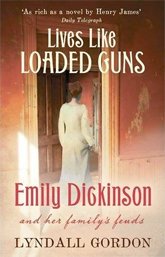
(I am of course acquainted with Lyndall Gordon's theory in the book Lives like loaded guns where an argument is made for how Emily Dickinson retreated into her house due to epilepsy. Which is also a likely possibility. But thinking that she chose this fate in order to be free and able to write is quite plausible, and also a bit more poetic.)

I remember thinking almost exactly what Rich expresses here: "I have a notion that genius knows itself; that Dickinson chose her seclusion, knowing she was exceptional and knowing what she needed. It was, moreover, no hermetic retreat, but a seclusion which included a wide range of people, of reading and correspondence." Emily knew she was special. And how could she be able to write in a traditional family life back in the 1800s? She saw the possibility of staying in her house filled with books, flowers and baking and filled her life with writing -- poetry, letters and everyday notes to family members, including sister-in-law Sue. This was obviously an important way for her to keep in contact with people. Through the written word she was letting people know who she was, how she was thinking and expressing herself, and also of course keeping up human relationships of sorts. My friends are my estate" she wrote in a letter, "forgive me then the avarice to hoard them". Rhythm and elegance of expression seem to run through her every wording.

The community was close, and Emily Dickinson was an active part of it in her way. That she was seen as different is no secret, but she was valued in her differentness. There were even some (rather daft, in my opinion) girls who tried to mimick her reclusiveness. Like her specialness lay in her staying indoors. She was known as a writer in her own day, though she didn't publish more than seven poems during her lifetime, not always in her own name, and always edited away from her strongly individual style. Possibly the fact that she was a woman clouded the minds of her early editors (i.e. Mabel L. Todd) and compelled them to "beautify" Dickinson's poetry, in order to please the eyes of the readers of her time. Or it was simply Emily Dickinson's stark talent and expression and her difference from any other thinker-writer that initially made them force her writing into a mould they could accept as poetry.

I'll conclude with Adrienne Rich's words: "Given her vocation, she was neither eccentric nor quaint; she was determined to survive, to use her powers, to practice necessary economies."

A bold choice. Gaining us, her readers.

Tuesday, August 03, 2010

Hauge and Dickinson

On the note of poetry and Emily Dickinson in the previous post, I remembered this poem by Norwegian poet Olav H. Hauge, which encapsulates both. It is called "Eg har tri dikt", which means "I have three poems".

Eg har tri dikt

Eg har tri dikt,
sa han.
Seg telja dikti.
Emily kasta dei
i ei kiste, eg
kan ikkje tru ho talde dei,
ho sprette berre ein tepakke
og skreiv eit nytt.
Det var rett. Eit godt dikt
skal lukta av te.
Eller rå mold og nykløyv ved.


I have three poems

I have three poems,
he said.
How about that, counting the poems.
Emily threw them
into a chest, I
cannot think she counted them,
she just slit open a packet of tea
and wrote a new one.
That was right. A good poem
should smell of tea.
Or of raw earth and newly split fire-wood.


**

In this short, simple poem smelling of earth and tea, there is a closeness to the matter, that of poetry, that I find moving and deeply satisfying. The casual mention of Emily Dickinson, using only her first name, creates an intimate feeling between these two poets, as different and divided by time as they might be. Like there is a fellowship only poets have access to, and that there everyone is on first name terms with each other (like a highly personalized version of intertextuality). A rather romantic notion, I clearly see, but still there is a feeling of the great diversity of poets being united by some common note. As I picture it, they stand underneath the same dome, low-ceilinged and vast at the same time.

You find a sort of poetics here. Poetry is being connected to the earth, to something homely and everyday-like. This I feel quite comfortable with. Again Hauge shows his close connection to simplicity. The language, the props, the normality of it all. Straightforwardness shining through in every stage.

Another interesting thing about this poem for me is how the tea and the raw, black earth seem to take on each others' characteristics - when Emily slits open the packet of tea, it smells like earth, and the earth towards the end smells like tea. This poem evokes these different scents in me which seem to seep out in a thick, golden brown liquid throughout my reading it. First the woody scent of an old chest, perhaps with hints of cherry (for some reason I imagine it must have been a cherry wood chest - the deep redbrown of it). Then the mentioned tea and earth, and then the fire-wood. All brown, promising rich and earthy scents.

I figure I like it when it feels like my toes are embedded in earth and grass when reading a poem. 

Sunday, August 01, 2010

The top of Emily's head

A citation of Emily Dickinson's that I read today went straight into my bones, or rather, made me feel like my bones are hollow and that in them the whispers and fluid starlight of poetry resides:

"If I read a book and it makes my whole body so cold no fire ever can warm me I know that is poetry. If I feel physically as if the top of my head were taken off, I know that is poetry."

Sadly, I do not know where this is collected from, but it is probably from a letter, as we have no other prose from her hand as far as I know. The art of describing poetry - or should I call it the difficulty, the neverending trial of describing poetry, results in many poetic sayings which point directly to the unspeakable, unnamable thing that is poetry itself.

Just in these two sentences, her strange genius is apparent - or rather, her openness to some unknown and unending realm of reality. I don't know a better way of describing the access to poetry - both creating and reading - than to have the daring to look the unknown straight in the eye. There might always be an abyss ahead (probably there is), but there is no saying that abyss won't be filled with startling and altering newness, ready to greet us.

If I should add an entrance to poetry myself, it would in this moment sound like this:

When light and weight, stone and stellar space meet in me and contains a whole new field, I know that is poetry. When light gathers in me and wishes to burst every boundary, I know that is poetry.

...which is rather more ethereal than Emily's quite corporeal and solid way of describing these things poetic. But pointing, I hope.

Thursday, February 11, 2010

Lyndall Gordon on Emily Dickinson

I just bought this book at Norli in Oslo, Norway, and I can't wait to read it. Lyndall Gordon, the author, is also the author of a well-documented biography on T. S. Eliot which I found interesting and balanced.

Earlier I have read the biography by Richard Sewall, which I can recommend. His book treated Dickinson's whole life, while this one seems to focus on her past few years, and the way her family's different intrigues affected not only her remaining years, but also the handing down of the myth of her life. One of Gordon's theses is that the family's feuds disturbed and restructured Emily Dickinson's legacy. Without a quarreling and intriguing family, whose members wanted to be the ones to administer and own the 'truth' about Emily Dickinson, there might not be such a mystery enveloping this poet today.

I probably wouldn't have bought this book if it hadn't been for the author. Many books on Emily Dickinson are treating rather obscure issues only, it seems, to earn some money on her famous name. And, of course, because so many books have been written about her already. This book might be one of those, but I hope that Gordon, who amongst other things is a senior research fellow at St Hilda's College, Oxford, is able again to balance a lot of information and possible rumours that might make this kind of book into a (better selling) pile of (more or less) baseless slander.

Anyway, can't wait to read it. It is always rewarding to read another person's take on poems you have read many times yourself. And, of course, the person behind the poems is set in a much bigger context than you yourself would be able to dig up if you were to read dissertations and history books and link everything together on your own. A book like this holds more interest to me than many novels. A book filled with citations of some of all time's most introspective, strange, innovative and ethereally beautiful poems and probably some background information of their issues and themes - how much more interesting can it get?

Update February 13th: I came across this article in the Guardian today, written by Lyndall Gordon herself. It seems that she is professing a theory about Dickinson quite similar to something I have thought myself for a long time: that the poet wasn't a shy and fragile recluse, but rather a passionate, inventive and decided person following her own tune. She did, as we know, write about "A still volcano life" in one of her poems, seemingly a good description of the kind of existence I imagine she had. Perhaps she decided that the only way a woman like her could live out her passion to write and be free, was to withdraw from society and its rather constricting rules of how to live and what to do.

"Uncomprimising", Gordon calls her. Seems like a good one-word summary of this intense and brilliant creature. And this sentence I love: "This woman was not like us: to know her is to encounter aspects of a nature more developed than our own."

Yes indeed.
Another update
: As I'm reading this book it turns out that it is actually a biography of Emily's whole life, but with her more as a part of the Dickinsonian circumference, the family's affairs, doings and dynamics etc. Which I think is a really good idea to portray the person in the poet in a fuller way.

Sunday, March 08, 2009

Hommage to the maker of a cover


As the title of this post hints, this is written just to honour the designer of the cover of the first compilation of Emily Dickinson's poems in Norwegian translation. It looks even better in real life, as the branches are glossed in shining black and slightly elevated on the cover. The book both looks and smells of cherry blossoms.
There is to be another volume before the translation is complete.
The translator, Kurt Narvesen (who is also a poet) told me a long time ago that he was working on translating Dickinson's poetry. I was thrilled but not quite sure whether he was really telling the truth. As he had just finished translating Walt Whitman's Leaves of Grass, though, I hoped he was indeed telling the truth.
And so he was.
The result can now be viewed - and read! - if you visit a well-assorted book store. May I suggest Norli? Just follow this link, and you're on your way.
I heard the first spring birds singing today in the late March snow. It left me in a strange mixture of melancholy and optimism for what's to come this year.

Friday, October 31, 2008

The Pocket-friendly Emily Dickinson


This is a handsome little book I bought about a year ago at Norli in Oslo, Norway. It is about 10X15 cm, and fits nicely in my handbag. I literally carry it with me wherever I go.

During train rides, or when sitting at my desk reading and writing notes and dissertations, I often pick this volume up for a break from what I am doing and for some creative input.

You can open this book on any page; originality and depth and striking metaphors will hit your eye in each poem here selected. Most of these poems are from around 1862 when Dicinson was in her most productive and literary interesting period.

Sometimes you just need a bit of comfort, or a sense of kinship, or you simply wish to be astonished by someone's imagination and perceptability, depth of insight and originality of thought.

Yesterday this poem was a gift of comfort to me. No need to say anything about the poem, it speaks for itself.

***

There is a pain — so utter —
It swallows substance up —
Then covers the Abyss with Trance —
So Memory can step
Around — across — upon it —
As one within a Swoon —
Goes safely — where an open eye —
Would drop Him — Bone by Bone.

***

Ca 1862

Wednesday, September 10, 2008

The soul selects her own society

Here is another poem (apart from the "This is my letter to the world" one) by Emily Dickinson which in some ways explains how she thinks about living in near solitude, as she seemingly did for the last half of her life.

The poem is from around 1862, one of her most productive and poetically successful years, and reads as follows:


The Soul selects her own Society—
Then — shuts the Door —
To her divine Majority —
Present no more —

Unmoved—she notes the Chariots — pausing —
At her low Gate —
Unmoved — an Emperor be kneeling
Upon her Mat —

I've known her — from an ample nation —
Choose One —
Then — close the Valves of her attention —
Like Stone —


I find this description of the soul's will to decide for herself with whom she intermingles quite accurate. First of all, the word soul is a slightly problematic concept, given the word's many and varying meanings throughout history. But I take it to be something deeply personal to you, yet universal, like it is your specific part of the large Being we all partake in and are composits of.

So your soul, according to Dickinson, has an inherent ability to choose what is exactly right for you, an ability to select the company or society best suited for you to evolve and expand into your expression of the capitalized Being we indeed take part in.

This I believe in as well, or rather, I know it is so. But I also know that we more often than not let other interests or confusions or mental noise or beliefs about how we should or shouldn't be, disturb our own frequency (you know, like the radios) and interfere with the best way for our souls to pick up signals. If staying by herself is what Dickinson thought would protect her soul's perceptability, that most certainly is her own choice.

Dickinson's isolation seems an actual choice which she made, actively and knowingly. It might be easy to think that she made this choice once and for all, but really what it means is that she made this choice over and over again, every minute of every day. So this quiet and solitary existence seems to have been the better way for her to live and produce her poetry - just herself and her soul. And it certainly looks a most fertile relationship, in poetic terms.

I wouldn't mind having been in the same room as her when she composed some of those remarkable poems, though - and I guess her poems are better company than many people anyway. They certainly last longer.

Thursday, September 04, 2008

Emily Dickinson - Queen Recluse?


This is my letter to the world

Slik skrev Emily Dickinson i ett av diktene sine (følger under). Hun meddelte seg og utforsket universet – innover, først og fremst – gjennom diktene sine, og gjennom brev og lapper. Gjennom det skrevne. Hun var svært intelligent, leste mye og skrev stiler på skolen som vakte misunnelse blant medelevene. Der hun vokste opp, i Amherst, Massachusetts, var ikke omgangskretsen alt for stor. Få kunne møte henne på det intellektuelle eller språklig lekne plan. Det var i det hele tatt få som kunne forstå henne eller romme dybdene, himmelstrebingen og de merkelige fargene hun bar i seg.

Etter hvert som det tynnet seg i rekkene av interessante mennesker og frierfristne, verdige unge menn, og etter hvert som årene gikk, gjorde hun sitt valg. Eller kanskje gjorde hun det lenge før. Hun valgte å føre sin dialog (med himmelen, med sin egen menneskedybde) på papiret. Blyant og blekk, kladdet og sirlig nedtegnet i hefter hun selv tråklet sammen.

Det er ikke riktig å si at ingen kjente til at hun skrev dikt. Hun lakk, bevisst, flere hundre små og større dikt gjennom brev og lapper til vennene sine. ”My friends are my estate”, skrev hun i et brev til Samuel Bowles, den mann hun antakeligvis lengtet etter rundt 1860, ”Forgive me then the avarice to hoard them!” Hun ønsket å bli lest, hun ønsket å bli sett og forstått. Dermed delte hun med seg av det beste hun hadde – diktene sine.

Det hun er mest kjent for ved siden av diktene, er tilbaketrekkingen fra samfunnet. De siste 20 år av livet bodde hun for det meste oppe på rommet sitt i huset som bestefaren hadde kalt ”the Homestead”. Det er vanskelig å gi noen god forklaring på hvorfor hun så gjennomført valgte å isolere seg fra omverdenen. ”Emily is the one who has to think. That is her job. No one else in the family has that to do” sa søsteren Lavinia om Emily. Lavinia gjorde det mulig for Emily å bli boende på rommet sitt resten av livet. Gjennom isolasjonen hadde hun tid og mulighet til å utforske tvingende eksistensielle spørsmål, liv og død, og menneskets forhold til Gud og evigheten. En kvinne i 1850- til 80-årene ville ellers hatt liten mulighet til poesi og filosofi av verdensklasse. (om man da ikke var adelig, men adel har aldri vært en del av det amerikanske samfunn – og blant puritanerne i New England virker det ekstra absurd.)

Brevvekslingen hennes var ganske stor, sett i forhold til hvor få hun forholdt seg til i det daglige. Men behovet for å bli forstått og hørt var åpenbart en sterk drivkraft. Hun forsøkte, ordløst, å vise hvem hun var gjennom språket og diktene sine. Og hva hun var. Hun visste at diktene var gode. Originale og annerledes, det visste hun også. Og at dette var skriftstykker som fortjente andre menneskers oppmerksomhet, og ikke bare hennes samtidige, var hun sannsynligvis meget klar over. Hun var ikke isolert, og (på eksistensielt vis) ensom kun av eget valg. Svært få kunne noen sinne ha møtt henne på samme intense plan som hun krevde, og det virker som om ingen var der for henne varig, mens hun levde.

Valget om å betro seg og utforske verden – og med det, seg selv – via papiret og det skrevne ord var ikke ett avgjørende valg. Kanskje tok hun heller aldri den bestemmelsen helt og fullt. Kanskje levde hun hele tiden slik midlertidig, hva vet vi. Det er lett å tillegge mennesker en hensikt med livet etter at de er døde, etter at deres gjerning på jorden er avsluttet og kan ses under ett. Hun åpnet i hvert fall for kjærligheten også i ganske voksen alder. Otis Phillips Lord, en dommer som var 18 år eldre enn Emily, kom i 1870-åra for alvor inn i Emilys liv. Etter at hans kone døde, ble brevvekslingen dem i mellom kjærligere, og en del av brevene leses som rene kjærlighetsbrev. Dette taler jo for at hun ikke stengte andre ute for enhver pris. Hun var ingen fullstendig ”Queen Recluse” - hadde man nøkkelen, ble døren åpnet.

(Leser du Richard Sewells The Life of Emily Dickinson, eller andre biografier, får du innblikk i et tidvis svært produktivt liv, og tidvis svært tilbaketrukket - ofte begge deler på en gang.)


Her er diktet det refereres til i begynnelsen:

This is my letter to the World
That never wrote to Me —
The simple News that Nature told —
With tender Majesty
Her Message is committed
To Hands I cannot see —
For love of Her — Sweet — countrymen —
Judge tenderly — of Me


© Tuva Langjord 2005

Sunday, April 27, 2008

A Perfect Sunday Poem -- Emily Dickinson


Truth and simplicity is usually all we need. Then we're going all along.


Some keep the Sabbath going to Church —
I keep it, staying at Home —
With a Bobolink for a Chorister —
And an Orchard, for a Dome —

Some keep the Sabbath in Surplice —
I, just wear my Wings —
And instead of tolling the Bell, for Church,
Our little Sexton — sings.

God preaches, a noted Clergyman —
And the sermon is never long,
So instead of getting to Heaven, at last —
I'm going, all along.


Nr 236 (in the edition by R.W. Franklin, 1999)

Saturday, March 15, 2008

Theme poem of my last week


The incomparable Emily Dickinson often strikes a chord that is perfectly in tune with my present mental and/or emotional whereabouts. Sometimes more so, as her verse deepens and refines a mental or emotional state, and gently steeres me into another landscape; wider, deeper, sharper and more vivid in colouring. She's been everywhere, she's seen it all, she's spelled it all.

She is a poet that never stops astonishing me with her imagery and her conceptual sharpness, innovativeness and elegant, poetic grandeur. There is nothing that can't be enveloped in that mind of hers and no new world or even universe of dimension that she can't unfold from the nooks of her imagination.

The following poem - one of her more famous, I am sure - is as good a witness of my sense of gloom, heaviness and depression as anything I have come across in literature. This landscape is familiar, though not the underlying tone of my life.


I felt a Funeral, in my Brain,
And Mourners to and fro
Kept treading — treading — till it seemed
That Sense was breaking through —

And when they all were seated,
A Service, like a Drum —
Kept beating — beating — till I thought
My Mind was going numb —

And then I heard them lift a Box
And creak across my Soul
With those same Boots of Lead, again,
Then Space — began to toll,

As all the Heavens were a Bell,
And Being, but an Ear,
And I, and Silence, some strange Race
Wrecked, solitary, here —

And then a Plank in Reason, broke,
And I dropped down, and down —
And hit a World, at every plunge,
And Finished knowing — then —


- Emily Dickinson

Wednesday, July 11, 2007

Emily Dickinsons blikk

Det er umulig å se på det ene bildet vi kjenner av Emily Dickinson uten å bli slått av blikket hennes. Jeg har lest tolkninger av det som sier at hun ser sjenert ut, forlegen, sky, tilbaketrukket. Da trekker man virkelig bare det man vet om livet hennes inn i fortolkningen.

Hvem kan se på dette fotografiet uten å se hvor direkte, hvor nådeløst og hvor brennende rakt hun blikker inn i virkeligheten? Hun ser så direkte på det eksisterende at jeg føler kulløynene hennes bore seg inn i brystet mitt. Jeg tror hun ser mer i meg enn jeg selv gjør - foreløpig.

Uansett kan hun -- det vil si diktene hennes -- fungere som en katalysator for å trenge dypere ned i materien. På enhver av materiens plan.


(PS - om du lurer på hvordan hun kikker ut på oss, kan du se henne i margen på denne siden - litt lenger ned og til venstre.)