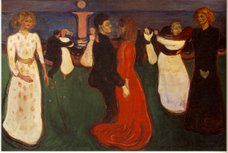
Hvem sier at vi ikke tror på noe lenger?
Vi tror på alt for mye!
Vi har en hel rekke forestillinger som vi går rundt og tror på, en hel del hodeskapte konsepter som vi tror eksisterer. Som vi tror er manifest i verden.
Jeg oppdager hele tiden ting jeg tror på. Fullt og fast. Det er en maske som jeg har klistret over ansiktet mitt. Over ett av ansiktene. Lagene innover er uendelige, virker det som. Bakenfor en hver tro, bak hver overbevisning som ikke er fullt ut kjent, erfart, sett, ligger det en delforståelse av noe som igjen føder en ny delforståelse. Lag på lag av halvsannheter bygger et etterhvert forkvaklet virkelighetsbilde. Og dette er den verden de fleste tror eksisterer. Jeg er en av dem, men prøver hver dag å se sannheten i øynene.
Thursday, July 20, 2006

Tuesday, July 11, 2006
Two of me
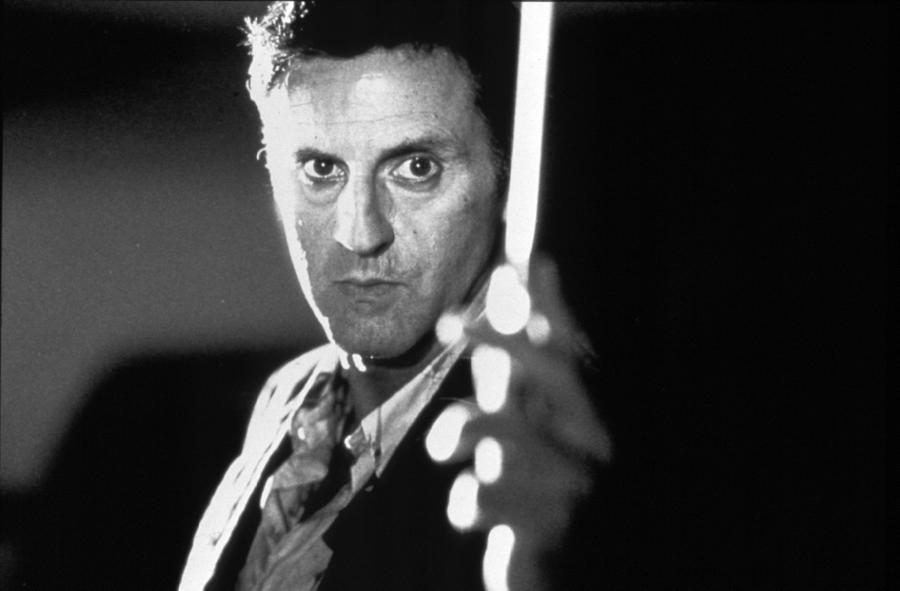
This is how I feel - ready to take on the world.
But habits of hiding are hard to end.
I love life but constantly tell myself to live it differently.
These few lines seem moody and glum, yet I feel perfectly fine - this is a paradox I often run into! I feel schizofrenic somehow, like I'm parted in two: One who is thinking, weighing pros and cons and inventing problems and concerns - and one who is acting, dealing with situations and people and being a part of this world.
I really feel split in two here! I don't see how these two can be united.
Blargh.
Monday, July 10, 2006
I would so like to immerse myself in beauty. To bathe in Bach, to fall into the depths of Rembrandt, to drink the seagreen of Tranströmer and Dickinson, to envelop all the greens and blues of nature! To ignite on the reds and yellows! Bring life along and I'll swallow it whole.
I thirst for all things beautiful, expressive and truehearted.
I thirst for all things beautiful, expressive and truehearted.
Friday, July 07, 2006
Augustine & me
I read a few paragraphs of Augustine's Confessions and felt my heart crack open. With a painful pang, veils who had been clouding my presence/existence, were drawn away.
I felt my own heart in its raw, unprotected state, quivering, pulsating, flowing with incredibly tender, liquid/vapour-like substance. All too intensely alive and potentially painful for me to be able to stay with, as I am at work. Surrounded by books (which are probably my best friends), but also by people. And I just couldn't break down or merge completely with the text. Or - the text is not really what I would say is what reached me today. It is the imprint of the soul behind it. Augustine flowed through his own words, from the well which he himself had contact with in order to write and see and feel and think what he did.
Meeting myself heart to heart like this made me realise, yet again, that the one you fear the most is yourself.
There is so much life in me, and you, that you do everything in your power to suppress it. It is painful to see and more painful to feel.
I needed a reminder of who I am.
As to who I can become, I dare not think. But am trying to just allow myself to be filled with true nature when it arises.
Love to all, always.
Sunday, July 02, 2006
What is a historian?
This is something I have been pondering lately: "what is a historian?".
Why this question formulated itself now has to do with a radio programme I listened to earlier this week. In it there was a historian working as a researcher of the future, a scientist who dealt with hypotheses about how future technology will affect the work and lives of people. It came to me, then, that just as much as delving into the past and getting lost in details and different times' different habits and ways of life, a historian acquires knowledge about the structure of human life.
People of all times have put their thoughts and ideas into action, into a pattern of life, have poured their thoughts about what life is and how it should be lived, into systems, into some kind of organisation. Often this has been done consciously, but I believe that just as often a "world order" (locally as well as globally) has been derived out of a set of ideas living in the people at that time. That a powerful current of ideas actually materializes itself through the people thinking, imagining and seeing them, that these people actually work as an instrument for the prominent ideas of their time.
A historian, who sits at a distance from these events, has the power to see the long lines and developments in human nature and how we execute our insights and powers.
So a historian can, by use of his imagination and comparative intelligence, transfer this knowledge about old times to how we might behave in the future.
Therefore, the term "historian" might not be the best to describe the real function he fills - or can fill.
Human systems scientist, perhaps? Not as catchy, though.. I admit that!
Any better suggestions?
T
Why this question formulated itself now has to do with a radio programme I listened to earlier this week. In it there was a historian working as a researcher of the future, a scientist who dealt with hypotheses about how future technology will affect the work and lives of people. It came to me, then, that just as much as delving into the past and getting lost in details and different times' different habits and ways of life, a historian acquires knowledge about the structure of human life.
People of all times have put their thoughts and ideas into action, into a pattern of life, have poured their thoughts about what life is and how it should be lived, into systems, into some kind of organisation. Often this has been done consciously, but I believe that just as often a "world order" (locally as well as globally) has been derived out of a set of ideas living in the people at that time. That a powerful current of ideas actually materializes itself through the people thinking, imagining and seeing them, that these people actually work as an instrument for the prominent ideas of their time.
A historian, who sits at a distance from these events, has the power to see the long lines and developments in human nature and how we execute our insights and powers.
So a historian can, by use of his imagination and comparative intelligence, transfer this knowledge about old times to how we might behave in the future.
Therefore, the term "historian" might not be the best to describe the real function he fills - or can fill.
Human systems scientist, perhaps? Not as catchy, though.. I admit that!
Any better suggestions?
T
Wednesday, June 28, 2006
Harry Potter and the Longest Story on Earth

There is no hiding it: I am a Harry Potter fan.
And although I love the books by themselves, just the way they are, isolated from other literature, there is no way you can avoid the fact that these books express the newest version of the long, long story that has probably lived as long as people have inhabited the earth. You have it expressed in The Lord of the Rings by Tolkien (where Frodo and Sam explicitly refer to themselves as taking part in an overall story, far outliving them), fairytales throughout the world, in lore and popular fiction, ballads, songs and so on. Where it all comes from is of course the next question, but the answer to that is still a bit beyond where I have tread. (Although I think it has something to do with where psychology comes from - what shapes us as humans, why we realize our Being in the shape of humans.)
There is the obvious "good vs bad" theme in the Potter books. There is also a demonstration of the human ability to create - to flesh out the web of ideas and deeply rooted images we all take part in. Rowling is brilliant in the way she uses fantasy, in creating a fully inhabited universe that we want to live in and explore on our own. She presents us with mystery, interesting characters, intelligent storylines, tragedy, comedy, solid friendships and a fight for life. The story she produces is as many-layered as expressed by the great variety of people who love her books (her tale, her long story). I think every reader meets her text with his or her own backdrop of ideas, feelings, memories, preferences etc, factors that make a person that particular person. And despite of this, nearly everyone reading her story gets engulfed. In a good way! I take it as a mark of her genius.
This story incorporates all the stories that went before it, and takes it a few steps further, into our own time - or, rather, the author is one step ahead of us, sketching out a newer, fresher world order. Something we feel it is worth reaching out for, something we feel as being the natural next step in the world as we know it.
Everything that is made and put forth in this world leaves an imprint of itself. Everything existent is always coloured by everything else. The Harry Potter saga (still in the making, that is one of the things that is so fantastic about it! that we get to share the long process from beginning to end, not knowing how the story ends) is without question the biggest, most successful story of our time.
One of the reasons, I think, is because Rowling is exactly one or more steps ahead of us all of the time. She made this universe and, more important still, she made the plot, which every good story springs from and moves towards. The plot is not yet revealed to us so the saga of the saga is also unfinished. (The saga of the saga might never finish, as I am sure you are very well aware). The real size and quality of the story, then, is yet to be unfolded. But the quality of the six books we already know leave us with no doubt that the last and concluding chapter (book 7) will live up to the expectations. Probably it will even transcend the previous ones, perhaps leaving some behind, dissatisfied. But more people are going to love it and see that this was the only way the story could be concluded, this was what the population of the world needed to read in the beginning of the 21st century. I believe that.
That is how much trust I place in J. K. Rowling.
T
Monday, June 26, 2006
Goodbye melancholy

After having made the discovery about choice and being the leader of my own life, I sensed that something slipped away from my experience of life. I realized that the ties that has kept me clinging to my childhood and my then experience of the world (easy and light, problem free - in a superficial way) were cut. Through the "revelation" I had about my set of beliefs rooted in my mother's view of the world, I at the same time let go of a major part of my melancholy - which, again, has made up a major part of my view of the world. Through easing up, through seeing more clearly the subjectivities of the world views that we are all indoctrinated with one way or another, I let go of a lot of melancholy feelings about childhood states - and seeing nostalgia as being a subtype of melancholy.
Nostalgia is almost exclusively connected with childhood, or the childhood you think you have had. Many of my melancholic moods have been triggered by a feeling that so much has changed for the worse since I was a child. That the world I lived in and experienced then never will be seen again. That all you can have is the remembrance of things past... This melancholy-nostalgia has been a huge part of my "identity", of the images and thoughts and memories I have pieced together to represent something I have called "me".
I also found that I have connected this state with the colour blue, or blue-grey, and that my sense of this particular colour has been very strong. So strong that it has actually rubbed off or melted into other parts of my life-experience. Another part of this identity-thing of mine has been being a serious, wide-eyed, observing girl. This part, too, has the taste and feeling of blue-grey to me. And I can't help but wonder, now, whether these two different expressions of my persona may flow from the same well. Whether they have the same root in me, so to speak. The state of being serious, which I easily slip into, and the melancholy state, which expresses itself with a more overall heavy and gloomy presence, stonelike and overwhelming, seem to share source.
Seeing this helps me distance from these two prominant features of my shell-like personality. But not identifying with them is another step. Distancing is one thing, ridding oneself of something completely is a more painful affair. It is painful to part with deeply rooted beliefs one has about oneself. Sometimes these beliefs can be so deeply rooted that you actually think they are part of you, that they make you you. Nevertheless, seeing these things about myself certainly lightens the familiar feeling of heaviness connected to melancholy or seriousness.
Hm.
Thoughtful, yet lighter and calmer "good nights" from me.
T
Saturday, June 24, 2006
You can actually choose
Right now, today, reading the newspaper in the still rather quiet bookstore that I work in, something struck me: I have a choice.
I was reading along in the weekend magazine that accompanies one of the larger Norwegian newspapers when I felt saturated and suffocated by the never ending messages about how to have a good time. How to dress the table in order to have the best summer party, how to decorate your home in the coziest fashion, how to dress for late, light summer nights, what to cook for your ten dinner guests for the garden party (that evereyone seemingly desperately longs to throw), in short: How to live life best.
Well, I have to protest. I have to take a moment and feel into my own chest - is this right for me? Do I believe in this popular mythology? It is so easy to be swept away and into a set of thoughts and mental images about how one is supposed to live one's life. And I realized now, more than ever before, how easy it is to just follow the lights in the aisle, to trot down the trodden path. I realized that in some dimension I had actually started believing in the most prominent ideas and images about how life is best led.
I have to mention, here, that my country lies so far north that when summer arrives, we all run outside and try to spend as much time there as we possibly can, and when fall comes we can hopefully say that we haven't stayed in more than what is strictly necessary for sleeping and other natural reasons... Or is this just a national myth as well? Can it be that the people who are living this myth are the most boisterous and loud and therefore the most visible, making their truths the most "real" truths, also for the rest of the population? I don't have the answer to that. But in my case, the shipper of the easy, rosy, lace-lined way of living was my mother. So I have been indoctrinated with this view for a long time. And, you know, she believes it; her way of having a good time is making a good meal, meeting friends for light, unchallenging chats, doing a little work around the house, tending her flowers and generally having a good time. And it works for her, it is enough. But - and this is something I sensed during childhood, this doesn't do it for me! I like to investigate things, to delve into the depths, to figure out why things are as they are, to understand the principle of just anything, be it human interaction, why this novel is better than that, what this author is actually saying, what happens when we think, what do we believe in and why, and so forth (for ever more).
It was such a revelation to see this! A relief! To just understand that I can actually live the life I would like to, without having to feel guilty that I am not living up to the flower-patterned "ideal" that penetrates the public set of ideals in this country.
I am sure my husband will be pleased to hear me say this. He has hinted, I now undersand, about this for some time. For as long as we have known each other, I believe. Hmm. Some catch things slower than others.
And, again, I feel I have to say that my mother's interpretation of what is a good life certainly is a good one, and I can understand why that is what she chooses for herself. But it isn't what I am searching for in this life. It is as simple as that.
Have a good Saturday!
(And choose to live it the way you like.)
T
I was reading along in the weekend magazine that accompanies one of the larger Norwegian newspapers when I felt saturated and suffocated by the never ending messages about how to have a good time. How to dress the table in order to have the best summer party, how to decorate your home in the coziest fashion, how to dress for late, light summer nights, what to cook for your ten dinner guests for the garden party (that evereyone seemingly desperately longs to throw), in short: How to live life best.
Well, I have to protest. I have to take a moment and feel into my own chest - is this right for me? Do I believe in this popular mythology? It is so easy to be swept away and into a set of thoughts and mental images about how one is supposed to live one's life. And I realized now, more than ever before, how easy it is to just follow the lights in the aisle, to trot down the trodden path. I realized that in some dimension I had actually started believing in the most prominent ideas and images about how life is best led.
I have to mention, here, that my country lies so far north that when summer arrives, we all run outside and try to spend as much time there as we possibly can, and when fall comes we can hopefully say that we haven't stayed in more than what is strictly necessary for sleeping and other natural reasons... Or is this just a national myth as well? Can it be that the people who are living this myth are the most boisterous and loud and therefore the most visible, making their truths the most "real" truths, also for the rest of the population? I don't have the answer to that. But in my case, the shipper of the easy, rosy, lace-lined way of living was my mother. So I have been indoctrinated with this view for a long time. And, you know, she believes it; her way of having a good time is making a good meal, meeting friends for light, unchallenging chats, doing a little work around the house, tending her flowers and generally having a good time. And it works for her, it is enough. But - and this is something I sensed during childhood, this doesn't do it for me! I like to investigate things, to delve into the depths, to figure out why things are as they are, to understand the principle of just anything, be it human interaction, why this novel is better than that, what this author is actually saying, what happens when we think, what do we believe in and why, and so forth (for ever more).
It was such a revelation to see this! A relief! To just understand that I can actually live the life I would like to, without having to feel guilty that I am not living up to the flower-patterned "ideal" that penetrates the public set of ideals in this country.
I am sure my husband will be pleased to hear me say this. He has hinted, I now undersand, about this for some time. For as long as we have known each other, I believe. Hmm. Some catch things slower than others.
And, again, I feel I have to say that my mother's interpretation of what is a good life certainly is a good one, and I can understand why that is what she chooses for herself. But it isn't what I am searching for in this life. It is as simple as that.
Have a good Saturday!
(And choose to live it the way you like.)
T
Friday, June 23, 2006
Situation: Here. Now.

Ok, this is me: I am sitting at work, on a desk in a large book store in Oslo, Norway. Outside there is sun. Inside it is quiet. You can hear the squeeking in the floor as people stroll around and the buzz of the air conditioning. Everything seems so.. quiet, almost deserted! And I find myself thinking, What am I doing here? You know those times when you see yourself from the outside, as if you are just looking at some stranger and wondering - how did I get there? How on earth can that be "me"? This is one of those times.
You have a sudden rush of seeing things a they are, looking at the world in a more objective way than usual, and you find that you are a miniscule entity in a large web - or rather, that although you are small and seemingly unimportant, you are actually a part of a living organism. You are part of Life. A holographic expression of the rest of the world.
From this perspective, every problem you think you have suddenly seems rather trivial. Your petty worries about everyday life seem small and unimportant. Well, in this perspective such worries are small and unsignificant. And in glimpses like these, I think you actually see things more as they are than you normally do. I think that this perspective is more real, more cosmic. Yeah, I think cosmic is the term here. You look at yourself with the eyes of the cosmos. With the stuff that you are made of, came from and (if logic can be used here, and why shouldn't it?) what you will return to when you no longer live in the shape you now have.
This is weird, seeing myself write these things. But I honestly believe that what I have said here is true.
Only half an hour left before we close tonight. I like being surrounded by books, but I also like seeing the sun while it is up. Well, nowadays it doesn't set until around midnight, but anyway...
This is me, again. Good night.
Thursday, June 22, 2006
Emily Dickinson

For some time now, I have been deeply fascinated by Emily Dickinson's strikingly original work. Her poems stand out as a unique chapter in the history of literature. Putting yourself in her shoes, in 1850-80 Amherst, MA, looking backwards and forwards at the line of poets and literates, you won't find many - if any - poets like her.
She is, of course, known as "The Queen Recluse" as she gradually withdrew from society and from the early sixties never set foot outside her house. You can have all sorts of opinions and interpretations of her choosing to act this way, but I dare say that had she been married and hence drawn into the normal busy life a family would demand, we certainly would not have the great amount of startling poetry from her hand that we now do.
Having of course a fine mind and the nature of questioning and searching and pondering, she would always have left an imprint of herself. But we would never have been able to take part in her originality and quality of mind.
As she so stands out in the landscape of literature, not merely picking up the thread left by some earlier poet, she also manages to be closer to us than many other writers whose work is coloured by the time in which they were written. Today, tomorrow - she will probably remain in the canon of the best poets in human history because of her sharpness, her direct approach to and expression of her thoughts/mental images and her original but enchanting and many-layered imagery. Her metaphors are quivering with life, leaving you with no doubt of her being in possession of her own language and that she is embodying it.
I would like to end this post with a poem I think is beautiful, strong and somewhat ethereal. And it is about poets!
I will probably return to Emily in the future. She is too marvellous to be left in the shadows.
Enjoy:
I reckon - when I count at all -
First - Poets - then the Sun -
Then Summer - Then the Heaven of God -
And then - the List is done -
But, looking back - the First so seems
to Comprehend the Whole -
The Others look a needless Show -
So I write - Poets - All -
Their Summer - lasts a Solid Year -
They can afford a Sun
The East - would deem extravagant -
And if the Further Heaven -
Be Beautiful as they prepare
For Those who worship Them -
It is too difficult a Grace -
To justify the Dream -
Emily Dickinson,
ca 1862
Wednesday, November 23, 2005
Den halvferdige himmelen

DEN HALVFERDIGE HIMMELEN
Oppgittheten avbryter sitt løp.
Angsten avbryter sitt løp.
Gribben avbryter sin flukt.
Det ivrige lyset veller fram,
selv spøkelsene tar seg en slurk.
Og maleriene våre kommer for en dag,
våre istidsatelierers røde dyr.
Allting begynner å se seg om.
Vi går i solen i hundrevis.
Hvert menneske en halvåpen dør
som leder til et rom for alle.
Den uendelige marken under oss.
Vannet lyser mellom trærne.
Innsjøen er et vindu mot jorden.
T. Tranströmer
Sunday, November 13, 2005
Örnklippan
Örnklippan
Bakom terrariets glas
reptilerna
underligt orörliga.
En kvinna hänger tvätt
i tystnaden.
Döden är vindstilla.
I markens djup
glider min själ
tyst som en komet.
Bakom terrariets glas
reptilerna
underligt orörliga.
En kvinna hänger tvätt
i tystnaden.
Döden är vindstilla.
I markens djup
glider min själ
tyst som en komet.
Tomas Tranströmer
Tuesday, June 07, 2005
For reading: Norwegian authors

The exams are over!
And now what?
There is always loads that I would like to do, read and accomplish while I am tied to the university. As the exams draw to an end and I find myself wonderfully freed from duties and deadlines, all the time on my hands seems to drown me - at least for a few days. I just don't know what to do with the blank days presented to me. But that usually doesn't last very long. Some days of the week I work in a large book store, check out its website: http://www.norli.no
To be surrounded by books gives a good feeling. Books can be better friends than many people.
I would like to recommend some Norwegian authors that probably aren't too famous in the rest of the world:
- A real writer, a truth-seeking novelist with a poet's pen is Knut Hamsun.
Many of his books are translated to English, German and other languages. He even received the Nobel Prize of literature in 1920. The books Pan, Mysterier (Mysteries) and Markens grøde (Growth of the Soil) are amongst his very best. In addition to the clear, lyric language these books also express some sort of national "ground tone" - a sort of Norwegian voice, sea-blue and tree-green.
- Olav H. Hauge is a poet from Hardanger, the green garden of the west of Norway, dramatically situated between high mountains and narrow fjords. Most of his life he worked as a gardener, but at heart he truly was a poet. His often short, simple poems stretch out in your mind as they unfold. As simple as they may seem, there is depth and width beyond all oceans. In addition to this simpleness, he has an extensive knowledge of the world's literature, of Chinese poets and other authors. All of this shines through his poems. Visit www.norli.no or www.amazon.com to check out English and Norwegian books by this author.
- Henrik Ibsen is of course not to be forgotten. This playwrite is famous throughout most of the world - at least by people who take an interest to the scene. One of my favourites amongst his plays is Peer Gynt. Ibsen himself called this piece a "dramatic poem" and left it for the next centuries' public to discuss what this really means. Although Peer Gynt mostly is presented as a play on a stage of some kind, this piece is just as good recited, listened to or silently read by yourself. In this dramatic poem (it's all on rhyme!) Ibsen has captured some of the Norwegian people's soul, for good and for worse. The drama of the landscape is reflected in the minds and deeds of the characters, mostly so in Peer himself. He is a dreamer, a boaster and a storyteller, but soft-hearted and kind as well. His wild tales and infortunate actions lead him into some real trouble. At one point he has to flee into the mountains, and there he meets the Mountain King - a troll of some kind. Peer has to flee from this one too, as he has dishonoured the Mountain King's daughter and the way they live. From now on, Peer Gynt faces a wild trip around the world (or so it seems). This story is exciting, poetic, musical, mysterious, wondrous and sometimes breathtaking. It would absolutely be better to read this play in Norwegian, but as not many people speak Ibsen's own language, it is good to know that Peer Gynt has been translated into many, many languages. Go to the library and see if it exists in your language!
- A Swedish poet worth reading and rereading is Tomas Tranströmer. He is still alive and productive. Through him we meet blue and brown simplicity, the lucid joy of ordinary life. And the mysterious darkness we all carry in us. Somewhere in his poems you are bound to meet yourself.
Sunday, January 16, 2005
Det er merkelig hvordan noe trigger en til å skrive. Det er merkelig hvordan stemmen forandrer seg når man skriver et annet språk. Å skrive på engelsk fører til et mer distansert forhold mellom meg og det skrevne og jeg innbiller meg at en engelskspråklig vil se dette like lett som jeg kjenner det.
Du trenger ikke gå så langt for å finne det rette, du trenger ikke søke land og strand verden rundt for å finne ut av mysteriet. Det eneste du trenger gjøre er å gå inn i deg selv. Der finner du utspringet til alt liv. Der finner du din ro, din rot, din trygghet og kilden til alt det du trodde du trengte å finne ut av på nytt. Har du kilden, trenger du ikke være redd for å gå tom.
Du trenger ikke gå så langt for å finne det rette, du trenger ikke søke land og strand verden rundt for å finne ut av mysteriet. Det eneste du trenger gjøre er å gå inn i deg selv. Der finner du utspringet til alt liv. Der finner du din ro, din rot, din trygghet og kilden til alt det du trodde du trengte å finne ut av på nytt. Har du kilden, trenger du ikke være redd for å gå tom.
Verden og meg
Jeg visste ikke når det skulle skje, men jeg håpet at det ville skje snart. Alt for lenge har jeg flakket omkring uten noe stødig holdepunkt ute i verden. I meg selv har jeg et sentrum så godt og sterkt som noens, men det er ikke alltid like fornøyelig å forholde seg til utenverdenen. Nå har jeg en ro og en stødig fremdrift. Jeg tør lene meg mot verden. Jeg vet at den vil ta meg i mot.
Tuesday, November 02, 2004
Essence, i guess
I believe one of the greatest challenges in life to be not running away. To not run away from unpleasantness, to stand up and stare life in the face when it comes to get you. Nothing should be more natural than this. But how many live by their ideals? There are times when you scratch the uneven surface of something essential, of something that is pure essence. This something you have to realise is a part of yourself, and that you yourself are a seed that can grow through asphalt, air and sky. That a part of the divine lives in you. Sometimes I can feel the soil in me, bits of earth and grass and leaves that bear witness of our very natural background, but sometimes I feel more like a machine or a hard metal something in a large mechanical device, like it's just a coincidence that we bear a resemblance to chimps and other large monkeys.
Almost just as hard as this is to head straight to the core of things. To be able to see through things rather than look at them, and then again to master the skill of dissecting the matter with language of some kind - words, music, colour etc. How many are able to look at a flower, let alone a tree or the idea "society", and then produce some drops of essence while explaining it? If anyone has the insight, can he then express it so that anyone understands what he has seen?Just look at this effort of describing the problem of describing things, it doesn't make matters very clear, does it? I'm trying to describe an abstract idea (which, by the way, is itself the definition of abstract), and find it difficult to succeed. I think it is important to make an effort. It is important to practice your humanity. It can be hard work, but all the more satisfying.
Good poets tend to point directly at the core of simple or difficult matters. That is one of the reasons why I like to read.
Vind fyker gjennom steinen
Insektet summer bladets fall
Fremdeles blinker fyret
Vinterklokken tikker i feil retning
Jeg har sendt fire båter til dadlene i Egypt
Min smerte er røkelse
Gresset hersker over mitt velkjente mørke
Døden retter tomheten opp med graner
Almost just as hard as this is to head straight to the core of things. To be able to see through things rather than look at them, and then again to master the skill of dissecting the matter with language of some kind - words, music, colour etc. How many are able to look at a flower, let alone a tree or the idea "society", and then produce some drops of essence while explaining it? If anyone has the insight, can he then express it so that anyone understands what he has seen?Just look at this effort of describing the problem of describing things, it doesn't make matters very clear, does it? I'm trying to describe an abstract idea (which, by the way, is itself the definition of abstract), and find it difficult to succeed. I think it is important to make an effort. It is important to practice your humanity. It can be hard work, but all the more satisfying.
Good poets tend to point directly at the core of simple or difficult matters. That is one of the reasons why I like to read.
Vind fyker gjennom steinen
Insektet summer bladets fall
Fremdeles blinker fyret
Vinterklokken tikker i feil retning
Jeg har sendt fire båter til dadlene i Egypt
Min smerte er røkelse
Gresset hersker over mitt velkjente mørke
Døden retter tomheten opp med graner
Tuesday, October 26, 2004
Valgfrihet er valgtvang
Valgfrihet vil også si valgtvang. Vi tvinges til å foreta valg hele tiden, fordi vi tilbys så mange veier og valg til enhver tid. Vi er ikke langt fra scenene i "Minority Report" hvor Tom Cruise-karakteren går fram gjennom en skog av opp-poppende reklamer direkte henvendt til ham. Et slikt mylder av opplysninger vil nødvendigvis også gjenspeile seg på innsiden av folks hoder, den oppbrutte, oppjagede stilen setter sine metalltenner i svampaktig hjernefiber og etterlater seg dype spor. Overfør alt det du ser til hvordan tankene dine beveger seg på, alle trafikkmaskiner med over- og undergående biltrafikk med evig strømmende kjøretøy, alle menneskene som haster mot ett eller annet av større og mindre betydning, alle tog og tunnelbaner som kjører inn og ut av fjell, opp og ned åssider, alle flyene som suser i kryss og tråkler co2-mønstre over himmelen, og all larmen som stiger fra bevegelsene, fra mennesker og biler og fly og gravearbeider, når er det egentlig stille? Dette selvsagt med utgangspunkt i øyet som ser byen, men er det ikke i byen de fleste mennesker bor? Øyets kraft kan ikke undervurderes. Det visuelle senter opptar en stor plass i hjernen vår. For mange, underskrivende inkludert, spiller det visuelle direkte inn på hvordan de tenker, på tankenes baner.
Flere muligheter innebærer flere valg. Dette burde igjen føre til mer ettertanke, til loddende virksomhet, men DET viser seg ikke å stemme. Ikke for den store hopen, og jeg vet at dette er en generalisering, men det er ganske så opplagt at de aller fleste er mer opptatt å gjøre og ta del i mye enn å virkelig tenke på de valgene de gjør. Det finnes lettvintløsninger for alt, og det er fristende å velge dem. Vi tror gjerne vi sparer tid, men det vi taper er kan hende kvalitet?
Ett ubestridelig gode med alle disse mulighetene er nettopp det, at de fleste har en mulighet til å leve akkurat slik de ønsker. Men det er jo dette med at medaljen har to sider. Hvis man kan se begge sidene på en gang, og være bevisst hva man putter i seg (i form av inntrykk såvel som mat), har det aldri vært en bedre tid enn nå. At det kreves mer av oss enn tidligere er i grunnen bare bra. Det gjelder å skjerpe tanken og det vi sier, hva vi velger å utsette oss for bør gjennomgå en kritisk utsilingsprosess. Vi skal ikke gidde å tenke over alt som kommer rekende vår vei. Skap deg de muligheter du ønsker deg!
Det er så mye som er mulig, mer enn noen gang.
Thekla
Flere muligheter innebærer flere valg. Dette burde igjen føre til mer ettertanke, til loddende virksomhet, men DET viser seg ikke å stemme. Ikke for den store hopen, og jeg vet at dette er en generalisering, men det er ganske så opplagt at de aller fleste er mer opptatt å gjøre og ta del i mye enn å virkelig tenke på de valgene de gjør. Det finnes lettvintløsninger for alt, og det er fristende å velge dem. Vi tror gjerne vi sparer tid, men det vi taper er kan hende kvalitet?
Ett ubestridelig gode med alle disse mulighetene er nettopp det, at de fleste har en mulighet til å leve akkurat slik de ønsker. Men det er jo dette med at medaljen har to sider. Hvis man kan se begge sidene på en gang, og være bevisst hva man putter i seg (i form av inntrykk såvel som mat), har det aldri vært en bedre tid enn nå. At det kreves mer av oss enn tidligere er i grunnen bare bra. Det gjelder å skjerpe tanken og det vi sier, hva vi velger å utsette oss for bør gjennomgå en kritisk utsilingsprosess. Vi skal ikke gidde å tenke over alt som kommer rekende vår vei. Skap deg de muligheter du ønsker deg!
Det er så mye som er mulig, mer enn noen gang.
Thekla
Sunday, October 17, 2004
Cocoa
I believe the cocoa bean to be vastly underestimated as a source of joy, happiness and everything positive in general. Is there a hole in your existence? Fill it with cocoa! Is there a hole in your stomach? Fill it with cocoa! Is there a whole in your wall, your ceiling or your love life? Stuff some cocoa in there!
Aaahh..
My sugar trip just ended.
Why is happiness such a short business.
Aaahh..
My sugar trip just ended.
Why is happiness such a short business.
Wednesday, October 13, 2004
TIP OF THE DAY
OK, forgot the Tip of the Day:
Drink loads of green tea, it really cleanses what's cleansable!
Drink loads of green tea, it really cleanses what's cleansable!
French grammar
I am making my very first appearance as a blogger today, I believe this will be a most painful affair if it turns out there is nothing to write, nothing in my life worth blogging out (hardly believable... ;o).
Presently I am occupied by a French task at the University of Oslo, making out all there is to know about the passive in French, or le passif en français. I would rather have a long walk in the forest surrounding the city, but sense has caught up with me and my duties must be done.
Gee, this is too boring to continue. Will write some other time.
Presently I am occupied by a French task at the University of Oslo, making out all there is to know about the passive in French, or le passif en français. I would rather have a long walk in the forest surrounding the city, but sense has caught up with me and my duties must be done.
Gee, this is too boring to continue. Will write some other time.
Subscribe to:
Posts (Atom)


 Posts
Posts