Tuesday, September 22, 2009

First sentences

There is a Norwegian author named Karl Ove Knausgård who has embarked on a literary project somewhat similar to that of Proust's. In six volumes, counting 2500 pages, he writes about the whole of his life from childhood to today - though he is no more than forty. The style isn't quite as enveloped and enveloping as Proust's (a good thing, surely, as this work is actually a hundred years) and, funnily enough, far more prosaic. At least on the surface.

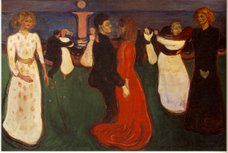
Only the first volume has been published, but two more will follow before christmas; one in October, one in November. The last three probably in January, February and March. (If anyone is cunning in Germanic languages, they will notice a concordance with the title on the picture to the right to the work of an infamous

Austrian some 70 years ago. An edge the author obviously wanted to his already quite noticeable endeavour. He is certainly not afraid to be called pretentious, and has also called this project a "literary suicide". As this theme demands a whole post of its own, I am continuing on a different note.)
I'll have to admit at once that I have not yet read this latest book of Knausgård's, but I am probably going to as I have read all (two!) previous books of his. Just the first page. But often you can get a sense of the whole work just by reading one page.
Like Proust, Knausgård introduces his hexalogy with a sentence easy to remember: "For hjertet er livet enkelt: det slår så lenge det kan." Or in English, something like this: "For the heart life is simple: it beats as long as it can" (pretty direct translation, no work of an expert). In Norwegian this sentence has a rhythmical drive, a simplicity in sounds and words, yet at the same time a poetic edge made out of words as basic as stick and straw, water and stone. What follows in this opening paragraph is a detailed, physical description of human death. Detailed, but still with that literary voice trailing behind, leading the prosaic (though dramatic) course to its end.
Proust's opening sentence is one of the most famous in the history of literature: "Longtemps, je me suis couché de bonne heure" - or "For a long time, I went to bed early." As we know, Proust has forever linked his name to the little dry bisquit called madelaine. I remember listening to a radio programme sometime around my twelfth year, hearing a woman speak passionately about an author who wrote in these marvellous sentences which stretched over two pages, and how he could describe the taste of a cake through pages and pages - and I remember really longing to find out how this literature was. Sadly the lady in my radio never mentioned the author's name from the time I got to listen to her, but I feel quite sure that it must have been Proust she was going on about. The joy of being presented with this strange and unknown literary master was almost greater than that of years later finding out who this person was, and later still to read some of his prose.

This simple yet alluring opening sentence reminds me of what often pulls me into a book: a taste of the author's very own universe, with the novel's specific tone included. Isn't this the reason we read books? To be enveloped in a strange but somehow familiar world where time is most relative and you are in a strange position between being the master of deciding the world's progress (as you decide when to pick up the book an break it off) as well as being led by the hand through a story you have no control over. "The world moves in appetency on its metalled ways", Eliot would have put it ("Burnt Norton" III).

A good example of first sentences which also says a great deal about the rest of the book is the beginning of Jane Austen's Emma: "Emma Woodhouse, handsome, clever, and rich, with a comfortable home and happy disposition, seemed to unite some of the best blessings of existence; and had lived nearly twenty-one years in the world with very little to distress or vex her." In this rather long sentence, we are introduced to the main character and the story which will unroll almost directly from her characteristics. This is a character-driven story with Emma in the thick of every twist and turn of the intrigues; she is actually the embodiment of the plot.
I love the idea of opening a book on any given page and getting the flavour, or almost the whole idea, of a book. And this flavour is probably strongest on the first page, where the author holographically presents his project to you, the reader. One can become incredibly wealthy feasting on brilliant minds. So subsequently, which place to go expand your mind-wallet beats the library?


Saturday, August 22, 2009

Jorge Luis Borges: The Ethnographer


I happened upon a story by Borges which has stayed with me. It is called "The Ethnographer" and is from In Praise of Darkness, a collection from 1969.

The story is about an ethnographer who starts out as an eager researcher in his field work in a tribe of native inhabitants somewhere on the American continent. Here he is supposed to live with a reclusive tribe and learn their secrets, for further use in academic studies.
He leaves a dedicated scholar wanting to lure out knowledge no one outside the tribe has ever had access to, so as to preserve it and publish it and then gain personal glory for his discoveries.

The young man stays for a few years with this tribe. Sleeping on the prairie, parttaking in big and small activities.

When he returns to his professor a new man, the conversation is as follows:
"'I learned something out there that I can't express.'
'The English language may not be able to communicate it,' the professor suggested.
'That's not it, sir. Now that I possess the secret, I could tell it in a hundred different ways. I don't know how to tell you this, but the secret is beautiful, and science, our science, seems mere frivolity to me now.'
After a pause he added:
'And anyway, the secret is not as important as the paths that led me to it. Each person has to walk those paths himself.'"
The turning point of the tale is really quite remarkably beautiful and simple: "The young man found that on nights of the full moon he dreamed of buffalo." This one sentence resets the web of the story and gives direction to the underlying mystery -- a mystery which is setting this man, this presumed antagonist, free.

Dreams of buffalos at the full moon leading to knowledge of the mystery.
Makes total sense to me.

Friday, July 17, 2009

Written on the sky - poems from the Japanese


I came across this book recently in the ever visited Norli bookstore. It is a small volume of Japanese poetry translated by Kenneth Rexroth, of whom the back flap tells me was "considered by many as the father of the San Francisco renaissance of the 1940s", and "brought public attention to world poetry through his [...] brilliant translations of Chinese and Japanese poetry".
What first caught my eye was, I must confess, the book's cover. The digital representation to the left here doesn't completely give the real book credit. It is a small, glossy black piece with the flowers and letters printed in a thick golden material, and the embellishment also flows across the book's back. The design reminds me of art deco, only with Eastern patterns and images.
So much for the cover, here is a sample poem:

How can I blame the cherry blossoms
for rejecting this floating world
and drifting away as the wind calls them?

(By "Shunzei's daughter")

There is something about the Japanese and cherry blossoms. As well as moonlight. Their very own kind of melancholy.

Monday, July 06, 2009

Summer melancholy and Kent


Again with the melancholy and the Scandinavians. It seems to me that every summer, bright, short, warm, damp, cool, whatever is going on in my life, the inevitable summer melancholy hits. Why is it?

Anyway, I remember discussing this with a friend about 10 years ago. We both have the same inclination to the still waters of the mind and she mentioned how she every summer returned to the Swedish rock group Kent. And tonight, I did exactly that. What better soundtrack to a melancholy lone summer evening? I think it's actually been a few years now since I listened to this band, but my! do they bring back my 18 year old self. Or rather, they remind me of everything which was back then and allow that old self image to exist as a ghostly figure right next to the presentday me. It's a weird feeling, but weird in a good way - like being a doubly developed picture from a camera taking snapshots from different epochs.
I kind of like that idea, existing on many levels at once while showing only one face to the world.
But I've got to say this for the melancholy: It's widely different now from before. Far less consuming, more...pleasurable I think is the right way to put it. I guess I rather like my hits of summer melancholy.
Awww, and this makes me think of The Smiths. Sigh. What a great band for adolescent longing. I guess I know the next band for my nighttime playlist.

Sunday, June 28, 2009

Monica Zetterlund


This is a Swedish jazz singer with a quite unique voice - something which is surely true of many jazz vocalists. She died a few years ago in a fire at her home in Stockholm, Sweden.
For a Scandinavian, or rather the Swedish or Norwegian listener, she represents something in addition to the soft, smoky tones of her voice. She was one of the first to sing Swedish folk tunes in the framework of jazz, always honouring them with a simple yet personal style.
It's hard to explain why many Norwegian and Swedish folk tunes resonate so deeply with these countries' inhabitants - or they do with me, anyway. It's like a nostalgic longing for a time I haven't experienced but which is still whispering of its existence in my bones. In her interpretations of the Swedish folk tunes she knew so well, Zetterlund transmits a vulnerability and something close to melancholy which is blood deep and is hinting of a green, shadowy, spruce-clad foresty landscape that every Norwegian or Swede is familiar with. It's like these green shadows, the smell of moss, fir and spruce and everything coniferous evokes the Northern parts of our souls - the bright white light in summertime and the dark cold of the winters. Or, again, this may just be me.
Anyway, I simply love Zetterlund's voice which is both cool and warm, soft and rough, and everything it hints at. Smoky jazz clubs and pine fresh air alike.
The album I most strongly recommend is Waltz for Debby, a co-act with Bill Evans. This album was recorded on one afternoon in 1964 and she had to rush to a concert she was to give that same night.
The author, filmmaker and comic Tage Danielsson captured her in verse in 1967. The following (in Swedish) is an excerpt from a longer poem called "Det eviga" (The eternal), and is both ethereally beautiful and almost brutally wild, just like our Northern nature - complete with a melancholy timbre:
En nattklubbsdrottning doftande av logar.
Ett lingonris som satts i cocktailglas.
En blond negress från Värmlands huldraskogar.
Monica Zetterlund. En jazzpaschas,
en sång som hejdar sej, till hälften hunnen,
och drar den där när Fröding satt på dass.
En väv, av guldbrokad och vadmal spunnen.
Men märk det vemodsdraget över munnen:
ett nordiskt sångardrag, en sorg i rosenjazz.
Danielsson clearly sees her inherent dicotomies, the mountain cranberry in a cocktail glass, a fabric both gold and hodden, and the sorrowful set of her mouth (which he explains as a familiar feature in Northern singers).
The concluding line (hard to translate) sums her up expertly: A sorrow in a jazz of roses. This obviously refers to her "Jag vet en dejlig rosa" (I know of a beautiful rose) from Waltz for Debby. Just listen to it.

Friday, May 08, 2009

Tomas Tranströmer in Oslo

Tomorrow evening the Swedish poet Tomas Tranströmer is on a visit in Oslo, in Litteraturhuset (House of Literature). He will be accompanied by a Swedish actor who will read from his poems, and a Norwegian poet and writer, Espen Stueland, who will introduce the poet and comment on the poetry during the evening. Tranströmer will be there and play the piano with his left hand.

I visited his last performance in Oslo a few years ago, at the club Mono. If you haven't yet been to a reading with this poet, I would advise you to go. He is getting on in age and his health isn't that good. But his poetry is. That good.

You can read an article about Tranströmer in the Guardian here.

Sunday, April 26, 2009

Strongly recommended

From today's play list, there are two pieces of music I would like to tell the rest of the world about, although a good deal of the rest of the world already knows them. Anyway.


One is Keith Jarrett's Vienna Concert. The first part of it, which I know best, is a slow build-up to a rhythmically complex but strikingly compelling stretch of about 10-15 minutes, which then slows down again to a sort of meditative ending based on wide open triads in major, with Jarrett's signaturial pure, wide and deep sound.


The other one is Bach's Brandenburger Concertos, and the piece I was jumping around to today is the first movement of the 5th concerto. In the end there, at least in my Trevor Pinnock recording, the cembalist outstrips and outcools any rock music I have yet heard by far!

Saturday, April 18, 2009

Modern American Poetry - a link

Very short today:


In my search for the station of the metro poem by Ezra Pound I came across this wonderful web resource, a compilation of modern American poetry. Hooray for Bartleby!


This is the poem I was looking for, by the way:

IN A STATION OF THE METRO

The apparition of these faces in the crowd;
Petals on a wet, black bough.


Monday, April 13, 2009

"A different sun" by Kolbein Falkeid - "En annen sol"


A different sun
XII

Silent around the boat, silent
like stars when Earth is switched off and people's words,
faltering thoughts and dreams are forgotten.
I place the oars in their rowlocks,
lower and raise them. Listen.
The small splash of drops in the ocean
cement the silence. Slowly, towards a different sun
I turn my boat in the mist: The tight-knit nothing
of life. And row,
row.

* * *
En annen sol
XII

Stille rundt båten, stille
som stjerner når jorda er avskrudd og menneskers ord,
famlende tanker og drømmer glemt.
Jeg legger årene i hver sin tollegang,
senker og løfter dem. Lytter.
Det vesle plasket av dråper i havet
sementerer stillheten. Sakte, mot en annen sol,
dreier jeg båten i tåka: Livets
tette ingenting. Og ror,
ror.

* * *

To me this poem is likea mix of the written poem and a lyric for a song. You can hear this poem performed (in Norwegian) by Anne-Grete Preus accompanied by Norwegian pianist Leif Ove Andsnes.
It was written as part of a collection of poems Falkeid wrote in the time after his daughter had committed suicide, and is a desperately beautiful part of a suite of twelve poems in this collection, named "A different sun" ("En annen sol").

Wednesday, April 08, 2009

Famous blue raincoat - a metaphor that lives


The heading for this post refers of course to Leonard Cohen's song. I was prodded into writing about this strangely alive metaphor by hearing the song again.

The blue raincoat transcends the whole lyrics, the whole song, and leaves me on the other side with a new impression imprinted in my being. This image leaves blue streaks in its wake, embodying and generating a bluish world of its own. The raincoat comes alive, that's the easiest way of describing what I mean. Easier still is to call it by its rhetorical name: This piece of clothing becomes a full-blooded symbol, though a symbol which seems to live by itself, which has taken on a form and transmits the content of the song just by existing as a symbol. Perhaps this is what some writers mean when they say that their characters become alive and start talking and having opinions on how the story should develop.


I love this quote from Cohen about his own blue raincoat:


"I had a good raincoat then, a Burberry I got in London in 1959. Elizabeth thought I looked like a spider in it. That was probably why she wouldn't go to Greece with me. It hung more heroically when I took out the lining, and achieved glory when the frayed sleeves were repaired with a little leather. Things were clear. I knew how to dress in those days. It was stolen from Marianne's loft in New York sometime during the early seventies. I wasn't wearing it very much toward the end."

And so the formatting strangles me. Marianne by the way is Cohen's Norwegian girlfriend from those years - So long, Marianne is spun around her.


(Also, if you're Scandinavian or can understand a Scandinavian language, it is worth checking out the recording of this song made by Kari Bremnes on the tribute album Cohen på norsk - "Cohen in Norwegian".)


Saturday, March 28, 2009

William Blake: The Problem of Sense-Organs


William Blake is a poet whose work I have scarcely touched the surface of. This little poem (which is an excerpt from the 330 lines long poem called The Everlasting Gospel) transmits the notion that it is not your eyes that do the seeing. It is something else. And I couldn't agree more.

I wouldn't necessarily call the sense-organs problems, rather as bodily (seemingly) functions which are necessary in our relation to the world. Both the outer and the inner. The problem occurs when you believe that this is all there is to it, that the organs are the sensing. If you sink into it, you will probably find that your sense-organs function on the inside as well as on the outside of your body. And where, one might ask oneself, is the seeing, feeling, listening, tasting and hearing happening then?


The Problem of Sense-Organs

This Life's dim Windows of the Soul
Distorts the Heavens from Pole to Pole
And leads you to Believe a Lie
When you see with, not thro', the Eye
That was born in a night to perish in a night
When the Soul slept in the beams of Light

William Blake, The Everlasting Gospel

Thursday, March 26, 2009

Kjernesunn familie - ja takk!


Hallo, hallo.

Har dere vært borti Kjernesunn familie-konseptet i Danmark? Hvis ikke vil jeg drive litt snikreklamifisering!

Enkleste måten å få vite mer om dette på er ved å gå inn på hjemmesiden deres, http://www.kernesundfamilie.dk/. De har også en nettbutikk. Ettersom de er lokalisert i Danmark er det ikke så mye vits å handle fra dem (blir fort mye momsbetaling, pluss rådyr frakt), men det er en fin side å få inspirasjon og guiding til hva man kan og bør ha i skuffer og skap av mat, oljer etc -alt uten kjemiske uhumskheter, sukker, melk og gluten.

Dette høres kanskje surmaget og trist ut, litt som Vegeta her i Oslo (nå Aubergine), men det er et heldekkende og friskt konsept, som egentlig ikke burde kalles noe konsept ettersom de forfekter en naturlig måte å leve på. Først og fremst er det mat familen Mauritson setter fokus på, men også trening og mental og fysisk (både kropp og hjem) utrensing er på programmet. Og viktigst er overbygningen av BEVISSTGJØRING.

Hvorfor skal man gå rundt som zombier uten å vite hva som er godt for en, og kanskje viktigere: hva som ikke er godt for en? Jeg kan godt svare: det er ingen grunn til å være zombie. For eksempel er det ofte en sammenheng mellom forskjellige krefttyper og hva man spiser/har spist opp gjennom livet, stress, leveforhold, og dette er ting man bør vite så mye som mulig om.

Jeg føler meg også mer og mer sikker på at melkemat ikke er godt for menneskekroppen, og har kuttet den helt ut. Nåja, om jeg skal begynne å skrive om hva jeg synes er bra og ikke bra å spise/gjøre/tenke, vil det bli et alt for langt og trettsomt innlegg dette. Men engasjert i disse spørsmålene er jeg! (Og jeg har mer enn litt dårlig samvittighet fordi jeg ikke trener nok, men trøster meg med at etter masteroppgaven er innlevert har jeg tid og rom til å få det inn i uka.)

Viktig er også mental rengjøring (et noe klamt begrep), og den kan nok gjøres på flere måter. Her er jeg imidlertid ingen mester. Tankevaner er vonde å vende, og det å falle inn i halvdepressive, selvdømmende mønstre er så alt for lett. Så muligens skriver jeg dette avsnittet mest for å oppmuntre meg selv. Og vet man hva: det hjelper!

Sunday, March 22, 2009

Daffodils, Wales, spring


Back from Wales, where the spring has arrived and the daffodils are flourishing! This picture is just like the road to Buckland Hall in Brecon close to Abergavenny, where we have just spent a week. What a difference from the Norwegian iceclad slopes. I must say, though, that I was very happy when returning to see that the snow had almost completely gone. Won't get my hopes too high up, though, a Norwegian knows better than knowing for sure that spring has arrived in late March. I remember three years ago when snow was falling thick in April...

Weather talk is a bore, but at the end of winter the hope for sun and mild weather is almost all-consuming!

Tuesday, March 10, 2009

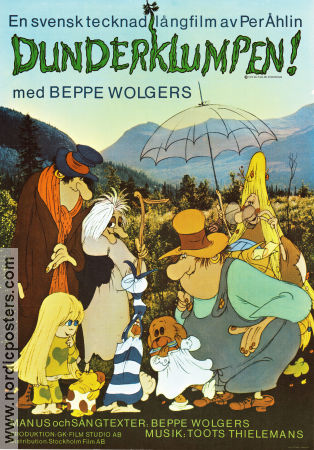
Dunderklumpen!

Jeg så igjen Dunderklumpen! i går kveld, og så moro er det lenge siden jeg har hatt det. Eller: så fint og barndomstrygt og -magisk er det lenge siden jeg har hatt det :-)

Filmen så jeg en gang da jeg var rundt 7 år, sammen med en venninne som hadde fått hjernerystelse og måtte holde seg våken. Siden da har jeg ikke sett filmen, men boka har jeg lest mange ganger som barn og også seinere.
Det er noe med svenske barnebøker og filmer som går rett inn hos meg nå og også gjorde det som barn. Handlingen i denne filmen er på midtsommernatta, og stemingen er intet mindre enn magisk - ikke bare gjør Dunderklumpen lekene levende, men den lyse natta og det velkjente norsksvenske landskapet med gran- og furuåser og fosser og kjemper og morgendis over vannene er perfekt setting for midtsommernattsmagi. Og så er det noe med 70-åra (som jeg ikke har opplevd) som virker så jordnært og fantastisk på en gang.

Filmen er fra 1974 og har god musikk (Toots Thielemans), levende og sjelfylte tegninger og ikke minst stemmer - Gösta Ekman og Hasse Alfredsson er to av de som gir stemmer til karakterene.

Heldig for meg at biblioteket hadde denne stående i hylla, ellers ville jeg aldri fått sett den på nytt. Kommer nok til å skaffe denne om jeg får barn noen gang! Mulig jeg er på vei til å bli gammeldags, men jeg liker godt de barnefilmene som ikke bare er action og skrik og skrål, men som har en rolig og morsom stemning. Og, ikke minst, magisk. Det er nøkkelordet på barndomskulturopplevelser som sitter spikret.

Sunday, March 08, 2009

Hommage to the maker of a cover


As the title of this post hints, this is written just to honour the designer of the cover of the first compilation of Emily Dickinson's poems in Norwegian translation. It looks even better in real life, as the branches are glossed in shining black and slightly elevated on the cover. The book both looks and smells of cherry blossoms.
There is to be another volume before the translation is complete.
The translator, Kurt Narvesen (who is also a poet) told me a long time ago that he was working on translating Dickinson's poetry. I was thrilled but not quite sure whether he was really telling the truth. As he had just finished translating Walt Whitman's Leaves of Grass, though, I hoped he was indeed telling the truth.
And so he was.
The result can now be viewed - and read! - if you visit a well-assorted book store. May I suggest Norli? Just follow this link, and you're on your way.
I heard the first spring birds singing today in the late March snow. It left me in a strange mixture of melancholy and optimism for what's to come this year.

Thursday, March 05, 2009

Jack Gilbert: Say you love me

Har du også hatt opplevelsen av å sitte inne i en glassboks, mens den du er sammen med sitter i en annen, med en helt annen farge på veggene enn dine? Eller at dine linser er konkave, mens den andres er konvekse? Noen ganger lurer jeg på om mannen min og jeg lever i samme virkelighet, eller om kommunikasjonen mellom øye og sinn går i rette, blanke skinneganger hos ham, og i krøllete, mangefargede ulltrådmønstre hos meg. Noe liknende har visst Jack Gilbert også erfart.


SAY YOU LOVE ME

Are the angels of her bed the angels
who come near me alone in mine?
Are the green trees in her window
the color I see in ripe plums?
If she always sees backward
and upside down without knowing it
what chance do we have? I am haunted
by the feeling that she is saying
melting lords of death, avalanches,
rivers and moments of passing through.
And I am replying, "Yes, yes.
Shoes and pudding."


Fra Refusing Heaven, 2005

Thursday, January 08, 2009

"I would not have been a poet, except..."


Long time no write, but by a strange coincidence, Wendell Berry once again ignited my desire for sharing through blogwriting. Berry is a poet I didn't know until I received a poem by him from a friend. This poem flowed in my direction from the same source, and how grateful am I.
I have not read any essays or stories by him, but I imagine his poetic vein infuses his words with lyric qualitites whatever genre he writes in. That is just the way with artists of language.
I find it particularly moving and true the way he honours silence and the huge world of wordlessness by circling his way around these truths through words. How else can we communicate truths to each other if not through some kind of language that we share? That is one of the beauties as well as shortcomings of language and being a human.
But, as we know, communicare necesse est. And what gems do not exist because of our need of communication? It is a most important web which ties us together.


VII

by Wendell Berry

I would not have been a poet
except that I have been in love
alive in this mortal world,
or an essayist except that I
have been bewildered and afraid,
or a storyteller had I not heard
stories passing to me through the air,
or a writer at all except
I have been wakeful at night
and words have come to me
out of their deep caves
needing to be remembered.
But on the days I am lucky
or blessed, I am silent.
I go into the one body
that two make in making marriage
that for all our trying, all
our deaf-and-dumb of speech,
has no tongue. Or I give myself
to gravity, light, and air
and am carried back
to solitary work in fields
and woods, where my hands
rest upon a world unnamed,
complete, unanswerable, and final
as our daily bread and meat.
The way of love leads all ways
to life beyond words, silent
and secret. To serve that triumph
I have done all the rest.


from A Timbered Choir: The Sabbath Poems 1979–1997

Tuesday, November 11, 2008

Wendell Berry: "How to be a poet (to remind myself)"

Stillness speaking.

***
How To Be a Poet

by Wendell Berry

(to remind myself)

Make a place to sit down.
Sit down. Be quiet.
You must depend upon
affection, reading, knowledge,
skill—more of each
than you have—inspiration,
work, growing older, patience,
for patience joins time
to eternity. Any readers
who like your work,
doubt their judgment.

Breathe with unconditional breath
the unconditioned air.
Shun electric wire.
Communicate slowly. Live
a three-dimensioned life;
stay away from screens.
Stay away from anything
that obscures the place it is in.
There are no unsacred places;
there are only sacred places
and desecrated places.

Accept what comes from silence.
Make the best you can of it.
Of the little words that come
out of the silence, like prayers
prayed back to the one who prays,
make a poem that does not disturb
the silence from which it came.


from Given, 2005


Wednesday, November 05, 2008

A propos Nov 4th

Yes, I am excited about the outcome of the election yesterday. Although it is unclear to me what exactly Obama's change means, his willingness to change and to be a flexible, unifying president rather than an antagonising leader working solely in a landscape of black-and-white and sharp contrasts without being able or willing to see nuances in the complex reality we live in, makes me hopeful.

"The new dawn of American leadership is at hand"? I certainly hope so.

Underneath are two statements from the candidates for presidency reaching outside the area of politics.

***

"There are greater pursuits than self-seeking. Glory is not a conceit. It is not a prize for being the most clever, the strongest, or the boldest. Glory belongs to the act of being constant to something greater than yourself." - John McCain


"I reject a politics that is based solely on racial identity, gender identity, sexual orientation, or victimhood generally. I think much of what ails the inner city involves a breakdown in culture that will not be cured by money alone, and that our values and spiritual life matter at least as much as our GDP." - Barack Obama

***

Friday, October 31, 2008

The Pocket-friendly Emily Dickinson


This is a handsome little book I bought about a year ago at Norli in Oslo, Norway. It is about 10X15 cm, and fits nicely in my handbag. I literally carry it with me wherever I go.

During train rides, or when sitting at my desk reading and writing notes and dissertations, I often pick this volume up for a break from what I am doing and for some creative input.

You can open this book on any page; originality and depth and striking metaphors will hit your eye in each poem here selected. Most of these poems are from around 1862 when Dicinson was in her most productive and literary interesting period.

Sometimes you just need a bit of comfort, or a sense of kinship, or you simply wish to be astonished by someone's imagination and perceptability, depth of insight and originality of thought.

Yesterday this poem was a gift of comfort to me. No need to say anything about the poem, it speaks for itself.

***

There is a pain — so utter —
It swallows substance up —
Then covers the Abyss with Trance —
So Memory can step
Around — across — upon it —
As one within a Swoon —
Goes safely — where an open eye —
Would drop Him — Bone by Bone.

***

Ca 1862

Sunday, October 26, 2008

Olav H. Hauge: "Your Way"


After having spent many days listening to the audiorecording of the Norwegian biography on Olav H. Hauge (Mitt liv var draum, K. O. Åmås), I find my mind to be more finely tuned into his language and poetry. His strongly marked dialect, which differs in many ways from my own more general and common form of language, in a way carries a specific personality. It's like his language becomes a poetic effect on its own.

The following is another famous poem here in Norway, and in its simplicity it points to something central to each of our particular expressions of existence. A comforting as well as uplifting poem. At least it is to me.


Your Way

No-one has marked out the road
you are to take
out in the unknown
out in the blue.

This is your road.
Only you
will take it. And there's no
turning back.

And you haven't marked your road
either.
And the wind smooths out your tracks
on desolate hills.

***

Translated by Robin Fulton

Wednesday, October 22, 2008

Children's art on environmental problems


I'm just adding this picture to my blog as I think it is so expressive. It is the winner of the first prize in UN's competition for children in portraying some of our planet's environmental challenges.


The picture is painted by a 13 year old girl (!), namely Charlotte Sullivan from England.

Tuesday, October 21, 2008

Gunvor Hofmo: Central female Norwegian poet


Gunvor Hofmo (1921-1995) is a central poet in Norway's literary landscape. The story of her life is closely connected to the poetry she wrote.
The second world war came to have a significant and lasting effect on her. Her first collection of poems to be published is from 1946 and was called Jeg vil hjem til menneskene, meaning I want to go home to the humans. With this she carved out a sense of meaninglessness and despair many people felt after that most inhuman war.
Part of Hofmo's personal despair during WW2 was that her particular friend, the Jewish Ruth Maier, was deported to Auschwitz where she died not long after. Their friendship was very close, and many have speculated whether they were lovers, although there is no real proof that they were more than friends. Later in life she lived with another woman writer, Astrid Tollefsen.
Maier's deportation may have been a major reason for why Hofmo was hospitalized with mental illness in 1943, with many more years of hospitalization before her. Ruth Maier's death was perhaps the most central event in Hofmo's life. Maier's absence seems to be an emptiness Hofmo keeps circulating around throughout her life, much of it recorded in her writings. From 1955 to 1971 Hofmo stayed at Norway's major mental hospital, and she did not publish anything during those years. But from 1971 she moved into a flat of her own and she again started publishing, continuing this until her death in 1995.
The following poem is one of great simplicity and at the same time great clarity and quiet. It is from a collection bearing the same name as the poem, published in 1991.


Navnløst er alt i natten

Navnløst er alt i natten
Stille, time etter time
legger tingene sine
navn fra seg
Treet og stenen
tolker altets stemme
og mister sin egen
identitet.


***
At nighttime everything is nameless

At nighttime everything is nameless
Quietly, hour by hour
the things leave their
names behind
The tree and the rock
interpret the voice of the absolute
and lose their own
identity.
***

In somewhat the same vein is this poem from 1973:


Ingen klage

Ingen klage. Ingenting
Som glasset langsomt
fylles med kostbar vin

fylles vår dag
av naken eksistens.


***

No complaint

No complaint. Nothing at all
Like the glass is slowly
filled with precious wine

our day is filled
with bare existence.

***

Saturday, October 18, 2008

Edith Södergran: "On foot through the solar system"


This is a poem by the Finland-Swedish female poet Edith Södergran, who lived from 1892 to 1923. Her early death was due to tuberculosis. She lived many places during her lifetime, also in the Finnish forests, composing poems quivering with intense sensibility, emotion and originality. She is one of the definitely most interesting poets of her time. As her brief life was punctured by illness, her poems sometimes have a feverish life-celebrating glow to them while others are marked by a welcoming of death.
Born in St. Petersburg, Russia, by Swedish-speaking Finnish parents, she attended a German all-girl school in St. Petersburg facing the grand Winter Palace, home of the tzar. Here she was taught German, English, French and Russian - but no Swedish, which was her mother tongue. She wrote her innovative poems in Swedish anyway.

Her verse was free and modern. No doubt she had been influenced by other authors; Nietzsche was of her favourites for a time. But her voice is everywhere clearly a woman's. This in itself must have been a novelty in the early 1900s. She has been described as an expressionist as well as a modernist, but at the same time she is at odds with more central modernist poets. Her poems are often passioned, etheric, visionary, fantastic, feminine (or even feministic) -- all in all different and unique.

I have risked translating a small poem. Seeing as my mother tongue is not Swedish but Norwegian, this is slightly daring, but our languages are so alike that they are almost counted as dialects. Anyone is invited to suggest improvements, though ;-)


Till fots fick jag gå genom solsystemen


Till fots
fick jag gå genom solsystemen,
innan jag fann den första tråden av min röda dräkt.
Jag anar ren mig själv.
Någonstädes i rymden hänger mitt hjärta,
gnistor strömma ifrån det, skakande luften,
till andra måttlösa hjärtan.


On foot my path wound through the solar systems

On foot
my path wound through the solar systems,
until at last I found my red robe's first thread.
I already have a sense of who I am.
Somewhere in space my heart's suspended,
sparks flowing from it, quavering the air,
reaching out to other speechless hearts.


***

This is one of her minor poems, and I will probably try to translate a few of her other, more famous poems. But when, I do not know.

Sunday, October 12, 2008

Poetic Playfulness


I would like to launch a theory: A large part of a poet’s or writer's significance may lay in his or her playfulness, her ability to play with language and meaning and creating out of it a sensible whole with surprising turns of sense and imagination.

With this I do not mean playfulness in and of itself as in puns and annoying alliteration (haha), but as part of a larger oevre, with this as another layer of showing a perceptive mind and an ability to use language in a new and original way. Humour shows another meta-layer of language perceptibility or sensibility, and when sense is filtered through a layer of playfulness, this usually adds life to the written work in question.

It is always liberating to see a writer play with his or her own universe, to insert a streak of light heartedness or humour in his/her work. It actually shows a sense of love for language and a sort of return to the reasons he or she became a writer in the first place. Why write, why not paint or play an instrument or act or create in a different way? Language is the writer’s instrument, and through it he depicts every little nuance of what he feels like mediating. Language is also the most diverse and differentiated means of communication we have, which leaves writers with a great and thrilling responsability. Without creative souls reinventing language every day, it would stay static, and professional writers do have an impact on how we perceive reality and our own way with words. I, for one, am happy about this. Thoroughly thought through ways of using language always upgrade the system.

Especially with T. S. Eliot playfulness is a welcome feature. His poems often seem difficult and zig-zawed together from citations and allusions to other literary works. But he has another, more creative side as well, and this is eloquently and enjoyably expressed in his poems in Old Possum’s Book of Practical Cats, a work which is quite extraordinarily different from his other works and was meant for children. Here he is inventive and playful and produces a completely different tone from his more austere works like The Waste Land, Ash-Wednesday and most of his plays.

In many ways, writing for children seems to open a vein of creativity in authors. For example, it was not until J. K. Rowling started writing a children’s book that she got published, and why do we love Tolkien’s works so much? Or C. S. Lewis’s books about Narnia? Alice in Wonderland? Fairytales? In them fantasy, imagination and creativity is in free flow! It is a beautiful part of human existence to be able to create new worlds in which many other people feel at home and loved.

Thank heaven for the imaginative writers!

Thursday, October 09, 2008

T. S. Eliot joking about himself


It was almost a relief to find this poem by T. S. Eliot in which he jokes about common (mis)conceptions of him as a person. He was often believed to be aloof, withdrawn, far too formal and rule-abiding. Virginia Woolf has many entries in her diary about Eliot, on how he seemed to dress more English than the English themselves, and how he once took to a strange habit of dabbing his face with green-white face powder. His on-the-whole unhappy marriage to his first wife spawned many malign rumours, and his personal life does seem packed with contradictions and personal oddities. But the more I read about him, the more it seems to me that he was just uncomfortable being around many people, and that in his intimate relationships to women, first and foremost, another, more alive and straightforward Eliot acted out.
In this enjoyable little thing called "Lines for Cuscuscaraway and Mirza Murad Ali Beg" (just the title, it's hilarious!) Eliot shows a ready mind for self irony which is not a common thread in his poems. A timely feature in such a formal being, I find.


Here it is:


Lines for Cuscuscaraway and Mirza Murad Ali Beg

How unpleasant to meet Mr. Eliot!
With his features of clerical cut,
And his brow so grim
And his mouth so prim
And his conversation, so nicely
Restricted to What Precisely
And If and Perhaps and But.
How unpleasant to meet Mr. Eliot!
With a bobtail cur
And a porpentine cat
And a wopsical hat
How unpleasant to meet Mr. Eliot!
(Whether his mouth is open or shut).


***

Isnt't it enjoyable?

Or maybe my deep dive into Eliot's life and works has made me blind to what is humurous to those not so into his work...

Sunday, October 05, 2008

Wallace Stevens: Poetry is the Supreme Fiction

A couple of days ago this poem by Wallace Stevens arrived in my mailbox. I haven't read it before, and I need to look up a few of these words before I completely understand it, but it certainly looks like a poem in Stevens's easily recognizable style.

The following intro accompanied the poem. As it is a good intro to Wallace Stevens, even with a brief biograpy, I simply put the whole thing here:

It's the birthday of Wallace Stevens, born in Reading, Pennsylvania (1879). Stevens was an excellent student. He went to Harvard. He decided that he would fulfill his father's desires and go to law school. Afterward, he took a job with the Hartford Accident and Indemnity Company, he eventually became vice president, and he remained at the job for the rest of his life. Each day, he walked the two miles between his home and his office, and during these walks to and from work, he composed poetry. Some people thought it was odd for an insurance executor to write poetry. Stevens did not. He said, "It gives a man character as a poet to have this daily contact with a job." In 1955, just months before he died, he received both the Pulitzer Prize and the National Book Award for his volume Collected Poems. He wrote:

***

Poetry is the supreme fiction, madame.
Take the moral law and make a nave of it
And from the nave build haunted heaven. Thus,
The conscience is converted into palms
Like windy citherns, hankering for hymns.
We agree in principle. That's clear. But take
The opposing law and make a peristyle,
And from the peristyle project a masque
Beyond the planets. Thus, our bawdiness,
Unpurged by epitaph, indulged at last,
Is equally converted into palms,
Squiggling like saxophones. And palm for palm,
Madame, we are where we began.


***

Poetry is the supreme fiction. I definitely like the ring of that line.

It is an excerpt from "A High-Toned Old Christian Woman", which according to the Wikipedia article on Stevens is a satirical poem in which Stevens plays with our ideas of religion and what to do when religion no longer holds a central place in our lives and societies. Apparently he wrote that “After one has abandoned a belief in god, poetry is that essence which takes its place as life’s redemption." (From Opus Posthumous.) Only to encounter the troubles with finding this fiction, and ultimately concluding that there is no way to contact or experience reality directly. Well, I don't know whether I agree with Stevens on this point, but it is nevertheless an interesting piece of poetic thinking.

Saturday, October 04, 2008

Anbefalt: Stefan Sundström


Denne fyren oppdaget jeg da Nästan som reklam kom ut i 1994. Det var et par år etter at Lisa Ekdal hadde feid over diverse etere med Vem vet og alt det der. Siden jeg har vokst opp med Cornelis Vreeswijk, Hasse&Tage, Astrid Lindgren (hvem har ikke det), Bellman og i grunnen hele den svenske kulturkretsen gjennom SVT, er jeg rimelig disponert for å like denne typen musikk. Det hjelper sikkert at mamma er sørlandsviseentusiast og tidligere visesanger og gitarklimprer også.
MEN altså, Stefan Sundström er visesangeren for de litt mer tøffe, unge av sinn, samfunnskritiske - de oppegående, kan man kanskje si. På samme måte som Vreeswijk har Sundström et galleri av personasjer med diverse karaktertrekk. Sabina (Fina Pina), Jan Banan, Nefertite og Galne Gunnar er noen av dem, og rundt dem spinner Sundström sin egen verden. Og den er ikke vanskelig å tre inn i. Det blir som å lese en bok, eller flere fortellinger som springer ut fra et miljø man etter hvert begynner å føle man kjenner.
I tillegg, eller samtidig, er det selvsagt musikken som skaper denne verdenen. Her er det rett og slett rockeviser av høy kvalitet, utgytt med bravur og pondus, men også med en følsom og poetisk åre som kommer til overflaten ganske ofte.

Grunnen til at jeg fremhever et album som er 14 år gammelt, er fordi det er det jeg kjenner best selv. Senere har han gitt ut bl.a. tolkninger av Allan Edvalls viser, eget samlealbum (Greatest hits) og flere andre studioalbum.

Tidligere har jeg nevnt hvordan Lars Saabye Christensen har møbler mye av oppveksten min med tanke på språklig fremmaling og en viss blågrå, halvmelankolsk oslostemning. På samme måte har svensk kultur, sikkert spesielt populærkultur, preget oppveksten min sterkt. Cornelis Vreeswijk og Astrid Lindgren var nok de to viktigste representantene for svensk kultur for meg som liten, og den stemningen disse to skapte er fremdeles sentral for meg, som en slags egen verden i barndomsverdenen. Og da Stefan Sundström came along da jeg var 14, kjente jeg straks at han var en mer moderne og nå-tilpasset rockpoet som jeg umiddelbart kjente meg hjemme hos.

Kanskje ikke noen vits i å si at jeg anbefaler å høre på noe av musikken hans?

Friday, October 03, 2008

Potter Perfect Stephen Fry


An hommage to Stephen Fry's incredible reading abilities

As a long-time self-proclaimed Harry Potter fan, I have read all seven books at least two times, and the last four several more. Which is all fun. But in addition to this I have listened to the audiorecordings read by Stephen Fry an embarassingly high number of times. Sitting there on the iPod they are so easy to access and many a walk, pre-bedtime minutes and times when I feel I need additional comfort, security or just to be surrounded by a sense of family (yes, I know the characters so well I now consider them part of my family), has been graced by Fry's outstanding interpretation of Rowling's Potter world.
I generally like reading for myself better than listening to audio books; nothing above, nothing equal to it. But with Fry's performance I actually think the books gets an extra dimension, or rather that it is so well transmitted through Fry that I stop thinking about that someone is reading aloud, that there is someone else interpreting the characters I know so well from the books. And that, to me, is quite an achievement. Additionally, it is not only me thinking this, but all people I have talked to about this agrees. My mother, whom I had long recommended reading the Potter books, first got hooked when I gave her all seven Potter books on her newly bought iPod. She started out listening to the Norwegian version, but did not find the reading satisfactory (or, perhaps, the translation, as I myself find the books far better in the original British-English than in translation). However, when she - grudgingly, as she does not feel too comfortable reading English novels - started on the Potter series, she could not get enough! I think she raced through all seven books in two to three weeks, something which is quite a feat, considering the length of the last four novels and a packed work schedule. No one was allowed near her iPod as she then might lose track of where she was at in the present Potter story.
This did not surprise me a bit; the Potter novels seem to have that effect on readers. But it did please me, as it allowed my mother some well-earned breaks from her demanding job and probably increased her energy levels.
Isn't it just wonderful that literature can have this impact on people? And how grateful am I that there are interpretors such as Stephen Fry out there. Well, by now you can probably tell ;-)

Monday, September 29, 2008

What is literature for

I'd like to cite an American author who just died but of whom I have never read a word. I came across an obituary in Morgenbladet, one of the few decent Norwegian papers. Central to this periodical is politics, societal issues and quite as important: cultural issues, with a range of book reviews and literary discussions.

Anyway, the citation is from the late David Foster Wallace, and immediately hit a chord with me:

The task of literature is to "disturb the comfortable and comfort the disturbed".

A simple as that. In many ways I agree with this sententia - it certainly covers central sectors of why literature is such a vitally important part of human society. Reading is important in order to challenge your own world view, and to expand both your horizon and vocabulary. The expanding of vocabulary also has the side-effect of clearing and adding depth and discriminative powers to your mind, something not quite unheard of. Through literature you enter completely different spheres than your own bubble of reality, and in many ways this is a means of gathering experience from fields you would never come in contact with in other arenas. You can sharpen your mind in the meeting of other minds, who through literature has found their own particular style - yet another benefit of a novel, short story, essay etc. A piece of literary art is (usually) a thought-through, carefully composed world of its own and in many ways one of the finest gifts a human can give another human being. "This is my world and you're welcome to enter it" seems a good caption to follow every book.
Quite as important as stirring up the far too comfortable sphere of consensus that most people more or less live in, is the other dimension of Wallace's words: To comfort those who find life hard and difficult and feel outside the rest of humanity. This is also a place many of us will find ourselves from time to time and it can be a great comfort as well as a reality check to read about other people's experiences and thoughts and through this find ourselves to be part of a whole even though we didn't believe it to begin with. We can even find soulmates in authors we have never met and will never meet - this, to me, is one of the greatest gifts literature can offer.
Literature is of course also an outstanding (probably the best) method for conservation of the thoughts and ideas of old masters.
I guess much of what is written in this post comes as nothing new, but it is still nice to remind ourselves sometmes why we read. And of course there are many more reasons for reading than what I have listed here. Want to add some?


Wednesday, September 24, 2008

Olav H. Hauge - Norwegian poetry at its simplest (and best)


I am surprised to find that I haven't written about this Norwegian poet before.

Olav H. Hauge is a significant voice in the Norwegian literary landscape. In a fashion he also is a significant voice in the Norwegian geographical landscape, as he in many ways expresses its grandeur and simplicity, its wildness and purity, and the human feeling of separateness from each other and from nature, while at the same time he transmits a sense of unity with everything and everyone.

His poetry varies in form, from sonnets to short haiku-like poems, and the quality varies as well, but he has written a great deal of poems of simple beauty and usually with a meditative approach to all things small and universal.

In addition to a body of hundreds of poems, Olav H. Hauge left many volumes of diaries behind when he died in 1994 and they bear witness of a widely read man. Professionally he worked as a gardener, and it seems almost strange that this single man living alone (for a great part of his life) in the green and mountainclad landscape of Hardanger (Western Norway) read Chinese poetry, French, German and British poetry, philosophy, classics, literary magazines - more than I am aware of, naturally. What a library he must have collected in his house at Ulvik.

He writes in a characteristic dialect, and the special tone this brings to his poems is hard to translate, but I think the following is a good translation by Robin Fulton. More of his translations of Olav H. Hauge's poetry can be found in this book. But here is an example of Hauge's poetry:


Everyday
Drops in the East Wind, 1966

You've left the big storms
behind you now.
You didn't ask then
why you were born,
where you came from, where you were going to,
you were just there in the storm,
in the fire.
But it's possible to live
in the everyday as well,
in the grey quiet day,
set potatoes, rake leaves,
carry brushwood.
There's so much to think about here in the world,
one life is not enough for it all.
After work you can fry bacon
and read Chinese poems.
Old Laertes cut briars,
dug round his fig trees,
and let the heroes fight on at Troy.


A few lines from this poem bring another towering figure in Scandinavian poetry to mind: Tomas Tranströmer. In fact, the whole poem reminds me of Tranströmer, but especially these lines: "But it's possible to live / in the everyday as well, / in the grey quiet day".

This greatly resembles Tranströmer's "Efter en lång torka" which you can read (in Norwegian, not the original Swedish) here. The last stanza goes as follows:

Det går att ringa upp hägringens ö.
Det går att höra den gråa rösten.
Järnmalm är honung för åskan.
Det går att leva med sin kod.


In translation it sounds something like this:

It's all right to telephone the island of mirage.
It's all right to hear the gray voice.
Iron ore is honey to the thunder.
It's all right to live by your own code.


The poem "Everyday" by Hauge also reminds me of Jack Gilbert, a poet I have discussed earlier (here too).

Again there is a certain Easternness in a poem that attracts me. When I say Eastern, I actually refer to a sense of simplicity which I most clearly see in various Eastern traditions. But in fact this is a quality of existence that every human being can occupy to great extent. You only have to look for it. Simplicity, space, openness and quiet is there all the time - it is just that we are usually looking in other directions.

The following poem is widely famous in Norway, and I think the craving for freedom it expresses translates well into any human language.


It's the Dream
Drops in the East Wind, 1966

It's the dream we carry in secret
that something miraculous will happen,
that it must happen –
that time will open
that the heart will open
that doors will open
that the rockface will open
that spring will gush –
that the dream will open,
that one morning we will glide into
some little harbour we didn't know was there.


There is currently a new volume out in English, with translations by Robert Bly and Robert Hedin.

On Sara Palin by Deepak Chopra

The following is a deeply interesting view on what Sara Palin represents not only in American politics, but in psychological terms, hence international and intrapersonal terms.

I agree with Chopra in that viewing political processes from a psychological angle might be questionable, but I find that he has a clear and plausible approach to the matter.

The wish to remain status quo and stick your head in the sand to the world's challenges (like a common ostrich) as many of the conservative republicans do is a trait no politician should possess. When this is exactly what we see in a presidential candidate and even more so in his candidate for vice president, it is timely to be alarmed.

I cannot tell you how apprehensive I am to the upcoming presidential election in the United States. In many ways it seems to me that this is the most important election for a long long time. More is at stake now than ever before in terms of who is chosen to lead the most polluting and most military powerful nation in the world.

The sense of my own single existence's insignificance pervades me and I can do nothing but hope for the best outcome. On behalf of nothing less than humanity.

From: Deepak Chopra
Posted: Friday, September 5th, 2008

"Sometimes politics has the uncanny effect of mirroring the national psyche even when nobody intended to do that. This is perfectly illustrated by the rousing effect that Gov. Sara Palin had on the Republican convention in Minneapolis this week. On the surface, she outdoes former Vice President Dan Quayle as an unlikely choice, given her negligent parochial expertise in the complex affairs of governing.

Her state of Alaska has less than 700,000 residents, which reduces the job of governor to the scale of running one-tenth of New York City. By comparison, Rudy Giuliani is a towering international figure. Palin's pluck has been admired, and her forthrightness, but her real appeal goes deeper.

She is the reverse of Barack Obama, in essence his shadow, deriding his idealism and exhorting people to obey their worst impulses. In psychological terms the shadow is that part of the psyche that hides out of sight, countering our aspirations, virtue, and vision with qualities we are ashamed to face: anger, fear, revenge, violence, selfishness, and suspicion of "the other." For millions of Americans, Obama triggers those feelings, but they don't want to express them. He is calling for us to reach for our higher selves, and frankly, that stirs up hidden reactions of an unsavory kind. (Just to be perfectly clear, I am not making a verbal play out of the fact that Sen. Obama is black. The shadow is a metaphor widely in use before his arrival on the scene.)

I recognize that psychological analysis of politics is usually not welcome by the public, but I believe such a perspective can be helpful here to understand Palin's message. In her acceptance speech Gov. Palin sent a rousing call to those who want to celebrate their resistance to change and a higher vision.

Look at what she stands for:

• Small town values – a denial of America 's global role, a return to petty, small-minded parochialism.

• Ignorance of world affairs – a repudiation of the need to repair America 's image abroad.

• Family values − a code for walling out anybody who makes a claim for social justice. Such strangers, being outside the family, don't need to be heeded.

• Rigid stands on guns and abortion – a scornful repudiation that these issues can be negotiated with those who disagree.

• Patriotism – the usual fallback in a failed war.

• "Reform" – an italicized term, since in addition to cleaning out corruption and excessive spending, one also throws out anyone who doesn't fit your ideology.

Palin reinforces the overall message of the reactionary right, which has been in play since 1980, that social justice is liberal-radical, that minorities and immigrants, being different from "us" pure American types, can be ignored, that progressivism takes too much effort and globalism is a foreign threat. The radical right marches under the banners of "I'm all right, Jack," and "Why change? Everything's OK as it is." The irony, of course, is that Gov. Palin is a woman and a reactionary at the same time. She can add mom to apple pie on her resume, while blithely reversing forty years of feminist progress. The irony is superficial; there are millions of women who stand on the side of conservatism, however obviously they are voting against their own good. The Republicans have won multiple national elections by raising shadow issues based on fear, rejection, hostility to change, and narrow-mindedness.

Obama's call for higher ideals in politics can't be seen in a vacuum.
The shadow is real; it was bound to respond. Not just conservatives possess a shadow – we all do. So what comes next is a contest between the two forces of progress and inertia. Will the shadow win again, or has its furtive appeal become exhausted? No one can predict. The best thing about Gov. Palin is that she brought this conflict to light, which makes the upcoming debate honest. It would be a shame to elect another Reagan, whose smiling persona was a stalking horse for the reactionary forces that have brought us to the demoralized state we are in. We deserve to see what we are getting, without disguise."

I can only say as the famously outspoken journalist Edward Murrow used to: Good night - and good luck.

Monday, September 15, 2008

Bokfest i Oslo 21. september

Dette er et arrangement jeg gjerne skulle vært på!

Utrolig mange forfattere på ett sted, og ikke noe hvilket som helst sted heller, men den fine hvite nye demokratiske estetisk vellykkede Operaen i Oslo, med virkelig mange forskjellige arrangementer. Hele operaen er i bruk, den store salen, den lille salen, taket, kafeen - det ser virkelig interessant ut.

Dumt for meg at jeg ikke er i Norge akkurat da.
Og: Om du ikke har lest Bisettelsen av Lars Saabye Christensen, er det et lesetips fra meg. Første halvdel kan være vanskelig å skjønne mye av, men språket er umiskjennelig Saabye Christensensk. Og når du har lest boka ferdig, kommer du til å ville starte på nytt igjen - og da får du mer ut av første del. Sikkert lurt å lese Beatles og Bly om igjen også, eller ha dem innen rekkevidde for å sjekke referanser. Jeg savnet det da jeg satt i min ettroms uten barndomshjemmets bibliotek for hånden :-)

LSC er en av mine språklige favoritter blant norske forfattere, og jeg må faktisk erkjenne at hans språkbruk og stemningsskapende metaforer har møblert mye av oppveksten min, noe som igjen vil si at han har vært med på å forme min egen språkfølelse. For meg er dette en sentral kvalitet, og jeg tror rett og slett jeg vil takke ham for det han har gitt gjennom bøkene sine (de jeg har lest av ham, med andre ord).

Det er spesielt å ha en så egen stil at den kan kjennes igjen på en eneste metafor, og slås fast når man leser to eller tre setninger i sammenheng. DET er et kvalitetsmerke ikke mange har opparbeidet seg.

Buckland Hall - again


Once again, this is going to be my location the next week. Green, green Wales.
I hope the weather there will be more like late summer than it has been in Norway these last weeks. Fall arrived menacingly fast this year. The trees are still mostly green, but the temperature has dropped low enough to give the air that crisp autumnal feeling - which I quite like, but I would still like the summer to hang around a little longer than it did this year.
What is definitely going to be good about staying there is the rural surroundings. I really miss that living in the city and look forward to walks in the countryside every day!
So long etc.

Sunday, September 14, 2008

The Jester Jon Stewart

As in King Lear, we might hear the blandest truths from a comedian's take on what is going on in the world.

In the interesting yet entertaining (an accurate description of Jon Stewart's TV persona itself) article in The Guardian today, I learned more about this satirist and his impact on the English speaking society.

When a number of well educated and intelligent people actually switch over to Stewart's The Daily Show to get a more accurate angle to the news than they get through American mainstream media, it says a lot.

The figure of the jester in the king's court is well known, as the only figure allowed to speak the truth without layers of cloudy rhetorics. In Shakespeare's King Lear, the jester is the one speaking the truth to spectators and readers and adds depth and clarity to the seriousness of the characters' actions. He puts his finger straight to the wound and tells us how and why it hurts. The same can be said about Jon Stewart and his crew.

As a Non-American it is refreshing to see his view on reality. From the outside it is hard to see what the American people actually think about the wildly subjective angles presented in the Fox News Channel, for example, or the black and white rhetorics of the present president, George W. Bush. To see Stewart make as much, or even more fun of the U.S. president than foreign media does is enlightening as well as entertaining for the outsider.

His take on the reality presented through mass media probably reflects many people's frustration with news coverage in the U.S., and I must say that The Daily Show's news angles come as a relief to me. At the same time he feeds us non-Americans with sharp-witted information and creative constellations about what is actually going on in the U.S., without all the filters the news normally seem to go through. So the filters are down, but what's up is an intelligent approach and an eye for surprising parallels between recent and not so recent political climates (like, for instance, the comparison between George W. Bush's speech 8 years ago discussing what he was going to change when president, almost identical to one of John McCain's most recent speeches).

I'd rather see Jon Stewart's news show before many of the "serious" news from different American media, as with Stewart I find witty and to-the-point interpretations of what is going on. Which is quite time saving, really. Why read five different editorials in serious news papers, when Jon Stewart does the job for you five times better?

Wednesday, September 10, 2008

The soul selects her own society

Here is another poem (apart from the "This is my letter to the world" one) by Emily Dickinson which in some ways explains how she thinks about living in near solitude, as she seemingly did for the last half of her life.

The poem is from around 1862, one of her most productive and poetically successful years, and reads as follows:


The Soul selects her own Society—
Then — shuts the Door —
To her divine Majority —
Present no more —

Unmoved—she notes the Chariots — pausing —
At her low Gate —
Unmoved — an Emperor be kneeling
Upon her Mat —

I've known her — from an ample nation —
Choose One —
Then — close the Valves of her attention —
Like Stone —


I find this description of the soul's will to decide for herself with whom she intermingles quite accurate. First of all, the word soul is a slightly problematic concept, given the word's many and varying meanings throughout history. But I take it to be something deeply personal to you, yet universal, like it is your specific part of the large Being we all partake in and are composits of.

So your soul, according to Dickinson, has an inherent ability to choose what is exactly right for you, an ability to select the company or society best suited for you to evolve and expand into your expression of the capitalized Being we indeed take part in.

This I believe in as well, or rather, I know it is so. But I also know that we more often than not let other interests or confusions or mental noise or beliefs about how we should or shouldn't be, disturb our own frequency (you know, like the radios) and interfere with the best way for our souls to pick up signals. If staying by herself is what Dickinson thought would protect her soul's perceptability, that most certainly is her own choice.

Dickinson's isolation seems an actual choice which she made, actively and knowingly. It might be easy to think that she made this choice once and for all, but really what it means is that she made this choice over and over again, every minute of every day. So this quiet and solitary existence seems to have been the better way for her to live and produce her poetry - just herself and her soul. And it certainly looks a most fertile relationship, in poetic terms.

I wouldn't mind having been in the same room as her when she composed some of those remarkable poems, though - and I guess her poems are better company than many people anyway. They certainly last longer.

Monday, September 08, 2008

Remarkable image


Isn't this image just remarkable? It is a sculpture entitled "planet" and is part of an exhibition at Chatsworth House in Derbyshire, England. The two people picturesquelly walking past are The Duke and Duchess of Devonshire.
I suspect Chatsworth House to be the house inhabited by Mr. Darcy in the 2005 version of Pride and Prejudice, directed by Joe Wright.

Lipton pyramide white tea


This is a tea that has become quite a close companion during my days at the university computer rooms and study chambers (or whatever you call it), a good number two to real loose-leaf tea which is just too messy to deal with in a spartan, book-infested environment like the university corridor in which I now daily lurk. The pyramid bags are a decent replacement for the real thing; loose tea leaves.
It says "white" tea on the label, but this is a truth up for moderation. If you study the contents carefully, you will find that only 11% of the tea leaves are actually white, whereas the rest is green tea and aroma (a hint of floral notes). I am always a bit disappointed with products not being what they pretend to be, but have grown more and more used to this widespread "moderating of truth" (also known as lying or misleading). You see it everywhere, and being a consumer is no simple task. You have to be highly conscious of what you buy if you are interested in knowing what you actually bring into your body. Read all labels carefully is my advice. I also have to add, that if you are a woman, you should take care to up or at least control your iron intake, as white/green teas have a tendency to flush this (and, I suspect other minerals) out of your system.
Well, this was not supposed to be a moralizing attribution to a large debate on food companies' business moral, but a short update on an OK way to have white/green tea when not at home. And although I am not for advertising any particular company's product, Lipton is the only producer I have noticed bring a pyramid white tea to the people. For which I am very grateful! And hopefully my dissertation will benefit from it, seeing as I write about English poetry ;-)
So long, Pyramid People.

Thursday, September 04, 2008

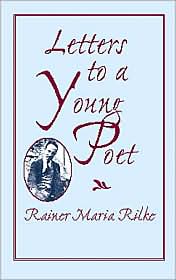
Recommended Read - Rilke's Letters to a Young Poet


This is a book I find it easy to recommend to anyone interested in writing, and especially poetry.

It is a collection of real letters written by Rilke to a Mr. Kappus, a young would-be poet, between 1903 and 1908. Rilke still had a lot of his life's work ahead of him.

In this slim volume, you hear a poet speaking with authority about what writing is really about, and what it takes to be able to call yourself a real writer: If you don't have to write - don't do it. If writing is not a necessity, you should do something else. This is one of the things Rilke tells the eager young man who cherishes a wish to become a significant poet. And beneath everything Rilke says, beneath every line, you sense his deep commitment to the poet's profession.

Writing from several cities throughout Europe and often referring to his having been ill, you also get a sense that being a full-time poet in no way is an easy task. From many of his poems, and certainly most photographs of him (many of whom I find rather too theatrical, but probably reflecting his personality) we get the impression of a man with an intense attitude which is also chanelled through his gaze.
Sorry I don't quote any of his poems, but I'm just not that familiar with his poetry. Some I know, of course, but as my German really never has been up to any scratch at all, and although being a Norwegian means our mother tongues are like first cousins, I just haven't spelled my way through his collected works yet...
OK, changed my mind. Here is a poem fitting the season:


Herbst

Die Blätter fallen, fallen wie von weit,
als welkten in den Himmeln ferne Gärten;
sie fallen mit verneinender Gebärde.

Und in den Nächten fällt die schwere Erde
aus allen Sternen in die Einsamkeit.

Wir alle fallen. Diese Hand da fällt.
Und sieh dir andre an: es ist in allen.

Und doch ist Einer, welcher dieses Fallen
unendlich sanft in seinen Händen hält.


* * *
Which beautifully describes the falling of the Fall.

Emily Dickinson - Queen Recluse?


This is my letter to the world

Slik skrev Emily Dickinson i ett av diktene sine (følger under). Hun meddelte seg og utforsket universet – innover, først og fremst – gjennom diktene sine, og gjennom brev og lapper. Gjennom det skrevne. Hun var svært intelligent, leste mye og skrev stiler på skolen som vakte misunnelse blant medelevene. Der hun vokste opp, i Amherst, Massachusetts, var ikke omgangskretsen alt for stor. Få kunne møte henne på det intellektuelle eller språklig lekne plan. Det var i det hele tatt få som kunne forstå henne eller romme dybdene, himmelstrebingen og de merkelige fargene hun bar i seg.

Etter hvert som det tynnet seg i rekkene av interessante mennesker og frierfristne, verdige unge menn, og etter hvert som årene gikk, gjorde hun sitt valg. Eller kanskje gjorde hun det lenge før. Hun valgte å føre sin dialog (med himmelen, med sin egen menneskedybde) på papiret. Blyant og blekk, kladdet og sirlig nedtegnet i hefter hun selv tråklet sammen.

Det er ikke riktig å si at ingen kjente til at hun skrev dikt. Hun lakk, bevisst, flere hundre små og større dikt gjennom brev og lapper til vennene sine. ”My friends are my estate”, skrev hun i et brev til Samuel Bowles, den mann hun antakeligvis lengtet etter rundt 1860, ”Forgive me then the avarice to hoard them!” Hun ønsket å bli lest, hun ønsket å bli sett og forstått. Dermed delte hun med seg av det beste hun hadde – diktene sine.

Det hun er mest kjent for ved siden av diktene, er tilbaketrekkingen fra samfunnet. De siste 20 år av livet bodde hun for det meste oppe på rommet sitt i huset som bestefaren hadde kalt ”the Homestead”. Det er vanskelig å gi noen god forklaring på hvorfor hun så gjennomført valgte å isolere seg fra omverdenen. ”Emily is the one who has to think. That is her job. No one else in the family has that to do” sa søsteren Lavinia om Emily. Lavinia gjorde det mulig for Emily å bli boende på rommet sitt resten av livet. Gjennom isolasjonen hadde hun tid og mulighet til å utforske tvingende eksistensielle spørsmål, liv og død, og menneskets forhold til Gud og evigheten. En kvinne i 1850- til 80-årene ville ellers hatt liten mulighet til poesi og filosofi av verdensklasse. (om man da ikke var adelig, men adel har aldri vært en del av det amerikanske samfunn – og blant puritanerne i New England virker det ekstra absurd.)

Brevvekslingen hennes var ganske stor, sett i forhold til hvor få hun forholdt seg til i det daglige. Men behovet for å bli forstått og hørt var åpenbart en sterk drivkraft. Hun forsøkte, ordløst, å vise hvem hun var gjennom språket og diktene sine. Og hva hun var. Hun visste at diktene var gode. Originale og annerledes, det visste hun også. Og at dette var skriftstykker som fortjente andre menneskers oppmerksomhet, og ikke bare hennes samtidige, var hun sannsynligvis meget klar over. Hun var ikke isolert, og (på eksistensielt vis) ensom kun av eget valg. Svært få kunne noen sinne ha møtt henne på samme intense plan som hun krevde, og det virker som om ingen var der for henne varig, mens hun levde.

Valget om å betro seg og utforske verden – og med det, seg selv – via papiret og det skrevne ord var ikke ett avgjørende valg. Kanskje tok hun heller aldri den bestemmelsen helt og fullt. Kanskje levde hun hele tiden slik midlertidig, hva vet vi. Det er lett å tillegge mennesker en hensikt med livet etter at de er døde, etter at deres gjerning på jorden er avsluttet og kan ses under ett. Hun åpnet i hvert fall for kjærligheten også i ganske voksen alder. Otis Phillips Lord, en dommer som var 18 år eldre enn Emily, kom i 1870-åra for alvor inn i Emilys liv. Etter at hans kone døde, ble brevvekslingen dem i mellom kjærligere, og en del av brevene leses som rene kjærlighetsbrev. Dette taler jo for at hun ikke stengte andre ute for enhver pris. Hun var ingen fullstendig ”Queen Recluse” - hadde man nøkkelen, ble døren åpnet.

(Leser du Richard Sewells The Life of Emily Dickinson, eller andre biografier, får du innblikk i et tidvis svært produktivt liv, og tidvis svært tilbaketrukket - ofte begge deler på en gang.)


Her er diktet det refereres til i begynnelsen:

This is my letter to the World
That never wrote to Me —
The simple News that Nature told —
With tender Majesty
Her Message is committed
To Hands I cannot see —
For love of Her — Sweet — countrymen —
Judge tenderly — of Me


© Tuva Langjord 2005