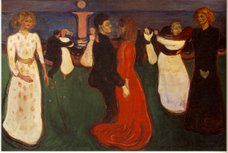
This deeply existential piece of art can speak for itself. As an addition, though, you might read what the Munch museum in Oslo, Norway has to say about it on its webpage:
The poetry of life

This deeply existential piece of art can speak for itself. As an addition, though, you might read what the Munch museum in Oslo, Norway has to say about it on its webpage:
This is where I will spend the next week, April 1st to 8th. Two times a year for a couple of years my husband and I have been here.
In this landscape, J.R.R Tolkien crafted parts of his Lord of the Rings-trilogy, and the trees, rivers, little roads, meadows and shrubbery tell the tale of hobbits. I wouldn't be at all surprised if a hobbit would come trotting down one of the rural roads, nor to find a hobbit's cave in one of the many green fields and copses around this venue. Many of the local names for places and rivers have obviously inspired Tolkien
You have the Buckleberrys (closely resembling the name of Buckland), Crick Hollow which most probably stems from the near Crickhowell, and many more that I have thought of before, though now I need a revisit to remember all of the striking resemblances of Welsh names and places to Tolkien's world of the hobbits. But names such as Talybont-on-Usk and Bagginshire surely had an inspirational effect og Tolkien's creative mind.
Well, there won't be any postings from me for at least a week - although probably no one ever reads this blog anyway, so...
T.S. Eliot


Denne historien kommer nok til å få større betydning enn mange av dagens lesere tenker på. På overflaten er det jo først og fremst drivende god underholdning. Men for mange unge er det et par skritt inn i et solid fundamentert univers, en verden drevet av mørke og lyse sider, men hvor det er helt tydelig at det lønner seg -- sjelelig først og fremst, og for omverdenen i forlengelsen av det -- å holde seg til det gode. Gjennom Hermione ser vi også hvordan kunnskap er viktig, bare den brukes rett. Ingen kan nekte for at Voldemort antakeligvis er mer kunnskapsrik enn resten av de magiske menneskene (ettersom Dumbledore nå er død), men han har forkastet enhver mulighet til å kunne kalles vis. Han er komplett ignorant når det kommer til mange solide innsikter om rett og riktig som Harry Potter har innarbeidet i ryggmargen.
Når vi ser hvordan Rowling har drevet fram disse karakterene, hva de har stelt i stand av vemmelig-fascinerende ondt og hjertegjennomlysende godt, er det umulig at Voldemort kan overleve denne historien. Det er faktisk umulig. Fortellingens storhet står og faller på hvordan hun utformer Harrys skjebne. At han vil overvinne Voldemort er klart. Men hvordan? Hvem og hvor mange kommer til å ofre seg for at Voldemort dør? Hvor mange av de Harry har gjennomlyst med sitt relativt rene hjerte har latt seg virkelig gjennomlyse, til den grad at de kommer til å ofre seg for at verden skal bli et bedre sted?
Avslutningen vil vise hvor stor tro J.K. Rowling har på at verden kan bli et bedre sted.
Og jeg? Jeg har stor tro på at hun tror den kan bli mye bedre, med mennesker som bryr seg om det gode i dem selv -- og dermed andre!
This movie, invented&directed by the legendary Hasse Alfredsson and Tage Danielsson, is such a treat to the playful lover of absurd-melancholy-politically oriented-Northern mythology&superstition-inflicted works of art.
I have looked for this for ages, and it has been completely impossible to localise. Through one of my mother's many teacher friends, however, arrived my rescue.
Kjersti: Thanks a lot!
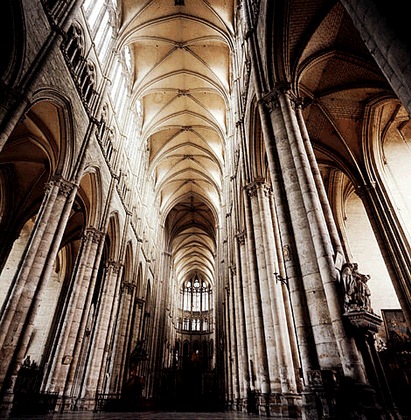
There is something about the gothic style, the obvious reaching for something higher, that is really appealing to me.
The pillars, the high windows, all the air that fills these buildings, the magnificent space in other words, is speaking directly to something divine in me. It creates a really good feeling to move in a space that has room for all of you, even for your craving for the high sky.
You're Prufrock and Other Observations!
by T.S. Eliot
Though you are very short and often overshadowed, your voice is poetic
and lyrical. Dark and brooding, you see the world as a hopeless effort of people trying
to impress other people. Though you make reference to almost everything, you've really
heard enough about Michelangelo. You measure out your life with coffee spoons.
Take the Book Quiz
at the Blue Pyramid.
I am currently reading this autobiography by a Hungarian woman who lived from 1897 - 1994. I have read about a quarter of the book, so naturally I cannot give you a full (re)view - but it gripped me instantly and glued me to the pages.
Why? It is all about recognition. It would be vanity to the extremes to say that I possess half of her insight and strong will to live and to explore everything in life, but still there are many points of recognition. Or rather, her thread through life is similar to much that I have seen and thought, but not believed strongly enough to carry out or stand up for. Whilst she always followed the voice within her that she knew was the truth, I have tended to adjust to my surroundings, wishing for peace more than complete truth.
In some respect I think that is an OK way to start life, as it allows you to be around people quietly, without too much strife. The down-side of this is of course that you might miss out on important battles for your own sake, battles for your truth (which most often turns out to be universal truths), that you give in to the habit of following other people's tune to keep the peace.
Well, this woman, Elisabeth Haich, certainly never gave in to such ideas. She seems to always have experienced directly what is true, and stayed with that. And acted accordingly. I rarely get inspired by what other people do or have done, but this woman is different. She is just revealing her truth throughout her life, and does not try to persuade you into anything. You can just read what she says and decide everything for yourself.
With me, it was recognition from the first sentence. Probably most people won't have that experience, and miss out on the depths of her words. But there is always someone or something speaking directly to you, you might just not have heard their voice yet.
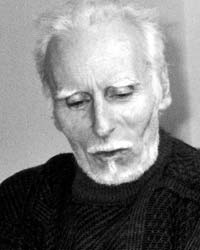
I can't control myself completely here, have to add another comment: This is one of many poems that reveals a certain Easternness with him. I am sure the Japanese and Chinese languages hold a shorter, simpler word for 'simplicity', and that their terms can be applied directly onto Gilbert's work. If anyone cunning in these languages should read this, please leave me a comment with some words or phrases that might suit this guy's "project".
(I suspect that his way with words is the Western way of expressing some simple truths many Eastern cultures&literatures have known and shown for years - the haikus as one example.)
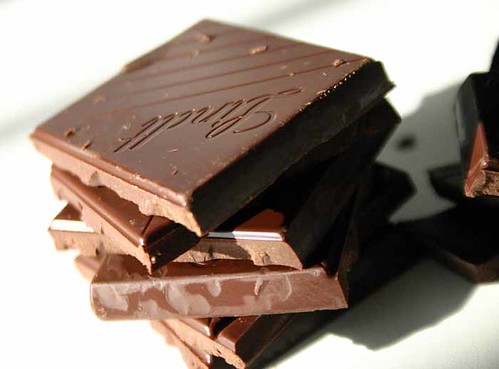
If in reciprocal nearness to this endazzling little friend, however, I generally go for the darkest of this brand. Their chocolates are organic, and if I remember correctly, real vanilla is used here as well. (The taste of vanillin is such a disappointment once you have bent your tongue to the real stuff.)