Saturday, August 25, 2007

"Flower fascism"?

I read a rather interesting article today. Although set in a Norwegian newspaper, I am in no doubt that it has been reproduced from an English/British article (I think the Guardian). The subject was Diana and Diana's death, ten years ago to the day.


Interesting in many ways, what I find to be most interesting is how the British today feel embarrassed and mildly surprised at their emotional reaction to Diana's sudden death. What has made them this bewildered? It seems to me that their immediate emotional reaction, which didn't last only for a moment, but a whole week, was their real and natural way of responding to the premature death of a person the country as a whole had loved more than they, until then, had known.

No doubt this public movement of grief took many of the Brits aback. When did they ever show this much affection for a person very few really knew, other than through interviews and articles of various grades of sordidness in the press. A few dared name their uncomfortableness during the "Diana week" when grief swept the nation, but I dare say for many this grief was as real as the various actions bore witness.

Placing flowers in front of Kensington and Buckingham Palace (hence the term "Flower Fascism"), irately accusing and attacking members of the press for their supposed parttaking in Diana's death, the anger directed towards the rest of the Royal family for not showing any remorse or even sorrow in the sad affair -- was all this the expression of something the British peoplenow need feel ashamed about? And if "unnatural" to the British people; unnatural in what way -- and why?

For an outsider, this whole second thought-thing seems rather peculiar. More accurately; it seems like a reaction brought on by too much thinking, too much looking back and analysing, too little trusting their own reactions and subsequent actions.

To me, this illustrates the way we let our mental activity misdirect our natural ways of living. Anything can be analyzed to death.

Friday, July 20, 2007

I morgen vet vi alt om Harry Potter


I morgen kommer den, en bok som får flere års lesning, undring, spekulering, diskusjon og filosofering til å stilne. Med den siste Harry Potter-boka, Harry Potter and the Deathly Hallows, får vi se hva Rowlings plott faktisk er.

Et av hennes sterkeste trekk er et solid, antakeligvis erfaringsbasert vett og vidd, hun staver fram leveregler som ikke er tenkt fram, de er sprunget ut av et virkelig liv. Det er selvsagt nødvendig med et godt hode for å trekke generelle regler/lover ut av erfaring, men det er det vel få som betviler at Rowling har. I grunnen tror jeg på at de aller fleste mennesker har et enormt potensiale, at enhver har uutgrunnelige sjelelige dybder -- men jeg har ikke like stor tro festet til hvordan den menneskelige mulighet forvaltes, utøves. Jeg blir stadig sjokkert over ny kriging, ny bestialitet osv, men er samtidig glad for å ha beholdt noe av min naivitet.

Men, her skulle det egentlig dreie seg om Potter. Det vil si Potter-plottet. Fram til nå er det ingen som faktisk vet hvor god historien er. Fram til nå har vi bare fulgt en rekke mysterier, fnist av humoren og kjent hvordan våre "moral fibres" styrkes gjennom lesningen av Potter-sagaen. Vi aner at det er et stort, klassisk oppgjør mellom ondt og godt som er i anmarsj, men vi vet ikke hvordan det utføres. Kanskje er det en vri på den klassiske lidelsesfortellingen, hvor Harry må ofre seg for at Voldemort skal dø, men så står opp igjen etter nåde fra naturlovene. Eller kanskje lærer Harry hvordan han skal overliste sitt negative avtrykk Voldemort, det vil si gjennomrisle Hr V med enkel godhet, noe som vil bli for skjørt og for sterkt for Voldemort, ettersom han har fortrengt og ødelagt alt av objektiv plussverdi i eget liv.


'Det enkle er det beste', er en av mange læresetninger man kan trekke ut av Potter-sagaen. Det er på ingen måte merkelig at en vanlig kvinne fra arbeiderklassebakgrunn i et av verdens største språksamfunn har slått så voldsomt igjennom klodelangs. Hun frisker opp vår etiske grunnstamme, den vi vet aldri råtner, den vi vet er den mest riktige og solide, og som vi aner har sin første sevje fra de tidligste mennesker. Bare det at vi er mennesker, gjør at en slik stamme er naturgitt. Vi vet at vi har muligheten til det gode og lyse, og at jo mer lys vi kaster, jo lengre og mørkere kan skyggene bli.

Det er så fundamentalt enkelt, det Rowling gjør, men det er hennes måte å gjøre det på, måten hun tvinner historien rundt dette åpenbare og i alle gjenkjennelige, som gjør at hun leses med så stor lyst over alt. Enkelt, med humor og vidd, og menneskelig varme - en trygg og riktig nærhet som vi alle kjenner igjen fra vi var barn og verden var overskuelig, lys og trygg.

Denne historien kommer nok til å få større betydning enn mange av dagens lesere tenker på. På overflaten er det jo først og fremst drivende god underholdning. Men for mange unge er det et par skritt inn i et solid fundamentert univers, en verden drevet av mørke og lyse sider, men hvor det er helt tydelig at det lønner seg -- sjelelig først og fremst, og for omverdenen i forlengelsen av det -- å holde seg til det gode. Gjennom Hermione ser vi også hvordan kunnskap er viktig, bare den brukes rett. Ingen kan nekte for at Voldemort antakeligvis er mer kunnskapsrik enn resten av de magiske menneskene (ettersom Dumbledore nå er død), men han har forkastet enhver mulighet til å kunne kalles vis. Han er komplett ignorant når det kommer til mange solide innsikter om rett og riktig som Harry Potter har innarbeidet i ryggmargen.

Når vi ser hvordan Rowling har drevet fram disse karakterene, hva de har stelt i stand av vemmelig-fascinerende ondt og hjertegjennomlysende godt, er det umulig at Voldemort kan overleve denne historien. Det er faktisk umulig. Fortellingens storhet står og faller på hvordan hun utformer Harrys skjebne. At han vil overvinne Voldemort er klart. Men hvordan? Hvem og hvor mange kommer til å ofre seg for at Voldemort dør? Hvor mange av de Harry har gjennomlyst med sitt relativt rene hjerte har latt seg virkelig gjennomlyse, til den grad at de kommer til å ofre seg for at verden skal bli et bedre sted?

Avslutningen vil vise hvor stor tro J.K. Rowling har på at verden kan bli et bedre sted.

Og jeg? Jeg har stor tro på at hun tror den kan bli mye bedre, med mennesker som bryr seg om det gode i dem selv -- og dermed andre!


(Hvis du vil se hva jeg har skrevet om Rowling og Potter-bøkene før, se her.)

Wednesday, July 11, 2007

Emily Dickinsons blikk

Det er umulig å se på det ene bildet vi kjenner av Emily Dickinson uten å bli slått av blikket hennes. Jeg har lest tolkninger av det som sier at hun ser sjenert ut, forlegen, sky, tilbaketrukket. Da trekker man virkelig bare det man vet om livet hennes inn i fortolkningen.

Hvem kan se på dette fotografiet uten å se hvor direkte, hvor nådeløst og hvor brennende rakt hun blikker inn i virkeligheten? Hun ser så direkte på det eksisterende at jeg føler kulløynene hennes bore seg inn i brystet mitt. Jeg tror hun ser mer i meg enn jeg selv gjør - foreløpig.

Uansett kan hun -- det vil si diktene hennes -- fungere som en katalysator for å trenge dypere ned i materien. På enhver av materiens plan.


(PS - om du lurer på hvordan hun kikker ut på oss, kan du se henne i margen på denne siden - litt lenger ned og til venstre.)

Tuesday, July 03, 2007

Erling Sandmo om Mozart

Kan det sies bedre?

"Virkningen av en virkelig god Mozart-fremførelse vil typisk være at det der, det kunne jeg også skrevet. Men det kunne du ikke gjort. For det du kjenner igjen i Mozarts klaverkonserter er ikke dine egne ferdigheter, men dine drømmer. Når du sitter der etterpå, lett og forløst, og tenker at det der var som om du skulle gjort det selv, da har musikken lurt deg til å tro nettopp det: Den har fått deg til å tro at drømmer kan bli virkelighet, fordi du har fått høre det du skulle ønske at du kunne, det du drømmer om å gjøre. Der annen musikk kan skape merkelige musikalske illusjoner, gir Mozart lytteren illusjoner om seg selv, hun kan kjenne seg overlegen, kanskje bedre enn musikken, løftet ut av den. For der andre komponister bryter musikkens lover, skaper Mozart musikk av drømmerens eget, skjulte reglement."

(Erling Sandmo, Hør, s. 195.)

Friday, June 29, 2007

Gunnar Ekelöf: Poetik

Dette diktet kan i grunnen tale for seg selv, det er en dikters syn på hva et dikt er - og så sant som noe annet jeg har sett skrevet om dikt.


POETIK


Det är till tystnaden du skall lyssna
tystnaden bakom apostroferingar, allusioner
tystnaden i retoriken
eller i det så kallade formellt fulländade
Detta är sökandet efter ett meningslöst
i det meningsfulla
och omvänt

Och allt vad jag så konstfullt söker dikta
är kontrastvis någonting konstlöst
och hela fyllnaden tom
Vad jag har skrivit
är skrivet mellan raderna

Monday, June 18, 2007

Äppelkriget!

This morning I had a most pleasant phone call - my mother called me to tell me that she had finally been able to lay her hands on this incredibly funny, imaginative and profoundly Nordic-comic movie -- Äppelkriget! (Meaning: The Apple War...)


This movie, invented&directed by the legendary Hasse Alfredsson and Tage Danielsson, is such a treat to the playful lover of absurd-melancholy-politically oriented-Northern mythology&superstition-inflicted works of art.

I have looked for this for ages, and it has been completely impossible to localise. Through one of my mother's many teacher friends, however, arrived my rescue.


Kjersti: Thanks a lot!


Sunday, June 17, 2007

Gothic Air


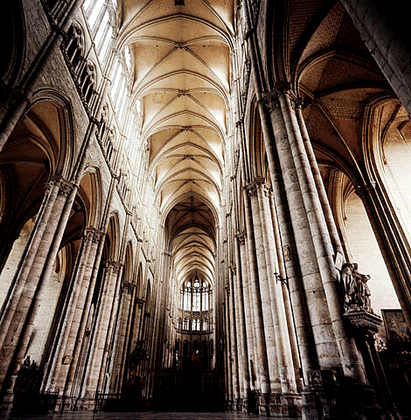
There is something about the gothic style, the obvious reaching for something higher, that is really appealing to me.

The pillars, the high windows, all the air that fills these buildings, the magnificent space in other words, is speaking directly to something divine in me. It creates a really good feeling to move in a space that has room for all of you, even for your craving for the high sky.

Wednesday, June 13, 2007

The Life-long Quest

So. What makes you open up and unfold like a staircase flowing suddenly everywhere.

One way of meeting yourself is through mirroring. When someone you respect and feel is your equal makes you aware of certain bad habits or unnecessary patterns, it really causes you to wake up and view yourself in a brighter light, again causing you to search your seams and mend the patchy ones from the inside. At least that is how it is with me.

Where does one's strength, one's human erectness and immense existential density come from? From where does one's wish for unfolding towards an unknown truth stem? What nourishes your craving to continue developing, to continue unfold and step up the always&everywhere unfolding staircase?

A calling from your soul.

Something in our deepest nature drives us on. The want for truth, light and simplicity, for the sometimes unrevealed layers of existence is burning in us. With undying curiosity this life-long, more or less glowing crave eggs us on in our quest for truth.

Truth. How I long for it! And yet, something tells me that the searching is equally important as that of attaining it. (Probably you wouldn't have one without the other... But still.)

Wednesday, June 06, 2007

Which book are you?

This was a most amusing quiz I had to take: The Book Quiz! Just answer a few, not-hard questions, and your literary alter-id shows up.

And I have to say, this was a remarkably succinct result - quite to the point, actually - although I measure out my life in tea spoons, rather than coffee ones. You should try too!

So this is me:


You're Prufrock and Other Observations!

by T.S. Eliot

Though you are very short and often overshadowed, your voice is poetic
and lyrical. Dark and brooding, you see the world as a hopeless effort of people trying
to impress other people. Though you make reference to almost everything, you've really
heard enough about Michelangelo. You measure out your life with coffee spoons.


Take the Book Quiz
at the Blue Pyramid.

Tuesday, June 05, 2007

Recognizing yourself in another


I am currently reading this autobiography by a Hungarian woman who lived from 1897 - 1994. I have read about a quarter of the book, so naturally I cannot give you a full (re)view - but it gripped me instantly and glued me to the pages.

Why? It is all about recognition. It would be vanity to the extremes to say that I possess half of her insight and strong will to live and to explore everything in life, but still there are many points of recognition. Or rather, her thread through life is similar to much that I have seen and thought, but not believed strongly enough to carry out or stand up for. Whilst she always followed the voice within her that she knew was the truth, I have tended to adjust to my surroundings, wishing for peace more than complete truth.

In some respect I think that is an OK way to start life, as it allows you to be around people quietly, without too much strife. The down-side of this is of course that you might miss out on important battles for your own sake, battles for your truth (which most often turns out to be universal truths), that you give in to the habit of following other people's tune to keep the peace.

Well, this woman, Elisabeth Haich, certainly never gave in to such ideas. She seems to always have experienced directly what is true, and stayed with that. And acted accordingly. I rarely get inspired by what other people do or have done, but this woman is different. She is just revealing her truth throughout her life, and does not try to persuade you into anything. You can just read what she says and decide everything for yourself.

With me, it was recognition from the first sentence. Probably most people won't have that experience, and miss out on the depths of her words. But there is always someone or something speaking directly to you, you might just not have heard their voice yet.

Friday, June 01, 2007

Another beautiful poem by Jack Gilbert

When someone gave me a poem by Jack Gilbert in reply to a post I had some time ago, I thought it was so beautiful and simple that I had to purchase a couple of his books. A few weeks ago, they landed in my mailbox (thank heaven for Amazon), and yesterday I found some time to look at The Great Fires - a collection of Gilbert's poems from 1982 - 1992. I was not disappointed.

His words carry their own weight and balance on a thin line of golden warmth, melancholy wetness and the now and then icy shock of feeling the total emptiness a life can hold.

Overall the word 'simplicity' seems to suit his poems the best. He recognizes the thin wire of life and is holding on to it, by words.


So here goes:


HARM AND BOON IN THE MEETINGS


We think the fire eats the wood.
We are wrong. The wood reaches out
to the flame. The fire licks at
what the wood harbors, and the wood
gives itself away to that intimacy,
the manner in which we and the world
meet each new day. Harm and boon
in the meetings. As heart meets what
is not heart, the way the spirit
encounters the flesh and the mouth meets
the foreignness in another mouth. We stand
looking at the ruin of our garden
in the early dark of November, hearing crows
go over while the first snow shines coldly
everywhere. Grief makes the heart
apparent as much as sudden happiness can.


I can't control myself completely here, have to add another comment: This is one of many poems that reveals a certain Easternness with him. I am sure the Japanese and Chinese languages hold a shorter, simpler word for 'simplicity', and that their terms can be applied directly onto Gilbert's work. If anyone cunning in these languages should read this, please leave me a comment with some words or phrases that might suit this guy's "project".


(I suspect that his way with words is the Western way of expressing some simple truths many Eastern cultures&literatures have known and shown for years - the haikus as one example.)


Tuesday, May 29, 2007

Wake-up Call

I think some of the most important tasks for mankind today is to delve into themselves in order to know who you are so that you cannot be tricked or hoodwinked to believe what others may want you to believe -- like staying alert and not being blinded by the mass media, TV programmes, commercials and other propagandic offspring.

The critical, awakened mind is pivotal to the individual's staying exactly that -- an individual. Every society needs its alert and independent people. If we all took what our leaders say for granted, 1984 would soon be upon us.

What do you say to the constructed dicotomies in the US, for example. How "real" is the world view that G.W. Bush presents? How many people actually believe in the "axis of evil", in the compartmentalizing of people into either being good or evil? How many actually think that this is our reality?

The same goes for all kinds of commercial behaviour. Through ads and commercials in every shape&form imaginable, needs are created in people. The need to buy a certain kind of product, itself produced to "fill a gap" in people's lives; "gaps" they never thought they had. Movies, TV series and books produced - not necessarily with the awake intention of doing so - to dull people's minds, to lull them into a technicolour dreamworld; to create an ILLUSION in which we are supposed to LIVE.

I believe people can think for themselves, but that many persons of today are too lazy, or too used to be living in an overly commercialized society to recognize in just how many ways we are heading towards the Orwellian 1984-scenario.

The world-wide "War on Terrorism" for example. This global, black-and-white war is alarmingly stupid, alarmingly lethal, and gaining an alarmingly lot of support in the public here in the West. What might this turn into? Perhaps a West vs East/Orient war? Is this wholly unthinkable? Isn't this the dicotomized world a certain president Bush is trying to make us believe is going to happen, if "we" won't attack "the others" first? Is this not what we are supposed to believe? And is this not the reason why many people will agree to set aside their individual and constitutional rights, and let their leaders equally set aside their nation's constitution in order to protect them against "terrorist attacks"?

Well, the military state might not be as dead as we thought it was.


The Annotated Pride and Prejudice

I bought this copy of the annotated version of Pride and Prejudice this Saturday. I have read the book several times, but this version with commentaries is so satisfyingly fat and with delicate colours (nicer than the picture shows, and with a smooth, yet textureful surface) that I just had to have it. 5 - 6 comments on each page gives you a more profound knowledge of Jane Austen's own times than by just reading the text.
It is interesting to see how words and phrases have twisted just a notch and today having a sligtly different meaning than back then. As English is not my first language, this is particularly helpful and makes me learn a lot. At the same time, not being a native English speaker, I notice that I am more open to what words might mean, and tend to bend the phrases to what they are supposed to mean. Also, being a Norwegian, I can easily see how many of the words in English stem from the Nordic languages - old Norse, as it is called. Even the syntax of old English resembles our syntax more than the modern English. So being an outsider can be quite helpful in some ways.

Every foreign language will always lead to discoveries. That is what makes it so interesting studying other languages. And I have to say, English is one of my favourites. It is flowing and musical and soft. My major lingua-love might be Latin. There is something so satisfying about that almost mathematical, seamless language. I wish I knew Greek, and Sanskrit, and I would really like to be able to read Chinese and Japanese ---

Well. That's never going to happen. But still...

I am such a dreamer.

Wednesday, May 23, 2007

My English Dream

For a long time I nurtured a dream of studying at Cambridge or Oxford University in England. From the age of 14, I believe, I really wanted to go there and study literature.


I mean, look at this place:
How could you not want to walk amongst those stony streets, breathing the learned gusts of ancient stone and dusty books?

My sad story is that I never quite believed that I could do it. My English would have to need a serious brushing up. I would have to read a lot more books (even though I love reading, there are SO many books I haven't read, and I am afraid my list of read books aren't quite up to scratch as to what is required in these institutions). The unconscious mantra I have nurtured sounds something as follows: "I am just a Norwegian girl, a tiny dot on this planet, how am I ever to rise up into any position of influence or interest to others."


This is such a self-subvertive view of life! It really bothers me that I have believed in this for so long! And even though I may come round to viewing life different now, at the age of 26, much is too late! I am never going to go into any of those great institutions, I am hanging around here in Norway, University of Oslo, because that is what seemed more safe at the time I started my "academic carreer" (I haven't finished my MA yet, so there you go. "Carreer" my bleep).


Anyway. Thinking back, now, it is sort of sad to see in just how many ways I have hindered myself in doing just what I would like to do. If I could, I would like to time-travel back to my 14-year old self, giving out wise advise and telling me that I can actually do what I want to. I can pursue my burning interests to the other side of the planet, if that is what would pay off most.

To any other young girl out there (yes, "girl", because there are mostly girls who don't have enough self esteem) I would like to say: Believe in what you've got. Trust that instinct telling you what you are good at. Follow your gut.

And. I know: Easy to say now, hard to believe then. Nevertheless. It is true.

Believe in yourself, girls!

Confessions from a Chocolate Connoisseur

I am, despite the headline for this post, quite a sucker for healthy food. My diet consists mostly of clean meat (fish, chicken, turkey etc - organic if possible), vegetables, olives, nuts, green&white teas, water, herbs (parsley, basil, thyme - you name it).


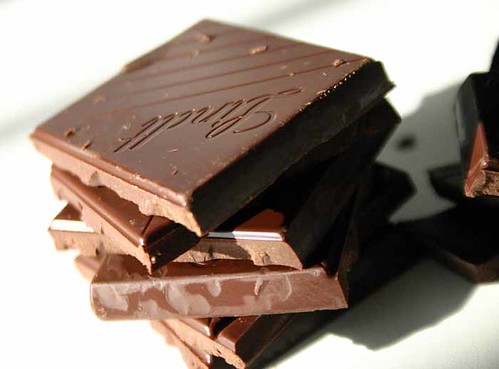
BUT: I am also quite fond of the dark-brown realm of the cocoa bean. if you can manage to control your intake of this substance, not allowing it to exceed 40 g a day (...), I see no reason why you shouldn't enjoy your melting, brown friend.


To the left is one of the chocolates I usually have a small stock of in my cupboard. This is a good blend of 85% cocoa and real vanilla, but the main reason I keep exactly this brand of chocolate in a cupboard or purse near me, is due to the grocery store's politics of what they choose to put on their shelves. This Swiss chocolate is nice, though, so there's no complaints there.


If in reciprocal nearness to this endazzling little friend, however, I generally go for the darkest of this brand. Their chocolates are organic, and if I remember correctly, real vanilla is used here as well. (The taste of vanillin is such a disappointment once you have bent your tongue to the real stuff.)


Everything in these products are organic, from the vanilla to the raw cane sugar (of which I would actually like some replacement, as I avoid sugar at all costs, exept for this, let's call it - aristocratic, habit).

If you like, you can check out their website here.

Now for the crown of the chocolate God-head; the best of the sumptious brown stuff I have ever tasted. Probably not a shock for most cooks or choco-connoisseurs: Valrhona chocolates.
Well, what can I say. I tasted this brand in a chocolate mousse (containing only chocolate and water) at a rather famous food-scribe's home about a year and a half ago. You know, I never really believed in the aphrodisiac effect of chocolate, but right there I nearly fell out of my pants. What a total experience of heavenly sumptiousness! I didn't just taste with my mouth; my whole body was in on the tasting. I remember feeling a sort of slow, still whirlwind spiralling around my head, heading down through my stomach, down to under my feet and then up again - all in a split second. Mind you, this split second lasted through the small (though sufficiently sized) portion of cocoa bliss. If I had had no self-control, the maker of this mousse could have had me, right there and then. (Only with the slight drawback of his beautiful girlfriend being in the room...)

I believe cooks mostly used their products earlier, but as the taste is so unbelievably --Mmmh-- more and more people seem to have discovered this brand.


Writing about this surely makes the level of saliva rise... I realize that I am actually quite capable of writing myself into a choc-craving state. Ah, well. Why not.
Healthy interests anyone? Anyone?

Monday, May 21, 2007

So hard to concentrate!

Menstrual cramps should be forbidden. How am I supposed to concentrate about my Baudelaire-thesis when it is difficult and painful to sit still, and my belly seems empty even though I just had an avocado, or a handfull of walnuts, or some olives...? True, the thinking centre is not situated in the lower belly, but trust me; your body has enough influence on your thinking as it is.

"Free your mind" - not so easy when your body drags you back down!

It usually helps drinking som nice, white tea. But today that just propels me into a spiral of "now I need something salty, because the tea washed all my minerals out", or, "this detox and purification thing happening when drinking white or green tea surely means I can now have some more olives", and... Blaargh, you get my drift.

Get Up&Out&Walking seems the only solution to this. Or, perhaps, viewing another episode of the BBC Pride and Prejudice?

Well, venting my frustration also seems a good idea.
But that doesn't make the pain go away.

Enough complaining for today.

Saturday, May 19, 2007

Tower of Song

Leonard Cohen

Well my friends are gone and my hair is grey
I ache in the places where I used to play
And I'm crazy for love but I'm not coming on
I'm just paying my rent everyday
In the Tower of Song

I said to Hank Williams: How lonely does it get?
Hank Williams hasn't answered yet.
But I hear him coughing all night long
A hundred floors above me
In the Tower of Song


I was born like this, I had no choice.
I was born with the gift of a golden voice.
And twenty-seven angels from the Great beyond
They tied me to this table right here
In the Tower of Song

So you can stick your little pins in that voodoo doll ---
I'm very sorry, baby, doesn't look like me at all
I'm standing by the window where the light is strong
They don't let a woman kill you, not
In the Tower of Song

Now you can say that I've grown bitter, but of this you may be sure:
The rich have got their channels in the bedrooms of the poor
And there's a mighty judgment coming
But I may be wrong ---
You see, you hear these funny voices
In the Tower of Song

I see you standing on the other side
I don't know how the river got so wide
I loved you, baby, way back when
And all the bridges are burning that we might have crossed
But I feel so close to everything that we lost
We'll never have to lose it again

I bid you farewell, I don't know when I'll be back
They're moving us tomorrow to that tower down the track
But You'll be hearing from me, baby
Long after I'm gone
I'll be speaking to you sweetly from a window
In the Tower of Song


Listen to this song on the album I'm your Man. I like it a lot. Perhaps you'd also like to see the documentary from 2005, I think it is called Leonard Cohen - I'm your Man. Made himself quite a catch-phrase there...


Wednesday, May 16, 2007

Jonathan Culler at play

Today I went to a doctoral dissertation or whatever the English term is - an oral dissertation for the doctoral degree, at the University of Oslo, Norway in this case. It was my brilliant teacher in short prose and prose poems who defended her written doctoral dissertation in order to become a Ph. D. in comparative literature.

While the content of her dissertation was&is highly interesting, the first opponent, Jonathan Culler (professor at Cornell University, US) spent most of his time babbling away about his own reflections on literature as a whole, and posed only three questions at the doctoree (again: whatever you call it in English). Three questions during an hour and a half's worth of speaking, this might give you a clear view of just how much Mr. Culler enjoyed listening to his own voice.

As he himself proclaimed, this was his first ever time as first opponent in this kind of environment, but that does not explain why he spent most of the time elaborating his own views of literature and quoting French authors in loud, well-articulated French (my guess is that he wanted to show off his good knowledge and practice of the language).

I am shocked!
I had hoped that one of the celebrities within literary studies would prove more interesting, and more sharp than this.
Not too brilliant, I have to say.

Saturday, May 12, 2007

Akademia - humaniora

Noen ganger skjønner man ting. Man skjønner dem på en slik måte at de griper rett inn i livet ditt, i ditt livs midt. Når man er litteraturstudent synes man i begynnelsen at det er veldig spennende, og at man får holde på med noe som for mange bare er en hobby. Men spesielt innenfor litteraturvitenskap skjønner man raskt at liv og lesing er to forskjellige ting. Man kan analysere dikt og noveller, lese teori og baske med abstrakte problemstillinger - dem går det aldri slutt på. Og det er gøy, bevares, lenge er det det. Men når man holder på med noe over lang tid, er det uomgjengelig at det man har viet seg til spiser seg inn til eksistenskornet som alt spinner seg rundt. Om noe ikke er helt riktig, viser det seg etter hvert - og ofte har man hatt en anelse om det lenge.

Litteraturvitenskap er fremdeles interessant og gøy, men det slår meg stadig vekk hvordan akademia alltid ligger ett skritt bak det som skjer, og at det tar jobben med å forklare og teoretisere og sette inn i historisk rammeverk.

Det dannet seg med en gang et slagord for dette: Fra lecteur til aktør! For hva er det vi driver med her vi sitter bøyd over bøkene? Analyse, spalting, forsøke å se hva andre har ment og tenkt og hvordan de har gjort det, mens de som har skrevet bøkene faktisk gjør noe. De lever gjennom ordene. Vi gjenopplever, gjenskaper, sekundærproduserer. Ikke rart at jeg noen ganger føler meg som en parasitt. Og et hakk fjernet fra eget liv. Det går nok fint an å leve et helt liv i hodet, noe sier meg at det er mer normalen enn unntaket. Men det er ikke bra nok for meg. Jeg må være her når jeg er her, for å si det sånn. Så får vi se om denne måten er den beste å gjøre det på.

Til slutt må jeg si: Jeg elsker litteratur, jeg elsker å lese, lære, reise gjennom andres ord. Det kommer jeg alltid til å gjøre. Men leser som livsvei er jeg ikke like sikker på om er holdbart i lengden. For meg.

Friday, May 11, 2007

Bibliotek!


Dette er biblioteket i Oslo slik det ser ut nå, i hovedhallen. Alt som står oppetter veggene er vanskelig å komme til, de færreste går helt oppe under taket for å finne bøkene de vil ha. Det er vel ca 20% av alle bøkene som står framme i dette "hovedbiblioteket" i Oslo - tegn på plassmangel, mon tro ---. Vi trenger virkelig et nytt, større, mer inspirerende sted å gå for å låne og lese bøker! Gleder meg altså veldig til det nye biblioteket skal stå ferdig, men jeg kan tenke meg at det ikke er ferdig før om ca 10 år... Hvorfor må man alltid vente på gode ting?


Her er noen biblioteker jeg gjerne skulle sittet og lest i!


Og drømmestedet? Det originale biblioteket i Alexandria! Ingen vet hvordan det så ut. . .


Men Escher har bedre fantasi enn de fleste.
Det øverste av disse andre bibliotekene har jeg faktisk vært i: Det er fra Trinity College i Dublin. Bøker er tunge tilstedeværelser, og atmosfæren er sumptuous (den ordlyden er bedre beskrivende enn de norske ord jeg kunne komme på).
For å se flere fantastiske bibliotek er det verdt å sjekke ut boka til Candida Höfer, med intro av Umberto Eco. Den heter rett og slett Libraries og har ISBN 0500543143.

Sunday, May 06, 2007

Litt skuffende filmopplevelse

Ok, oppdatering på ting jeg sa man burde glede seg til denne våren/sommeren:

Nå har jeg sett Spider-Man 3. Den var ok, men de to forrige var langt mer interessante. Bilkræsj og tjue meter høye sandmenn klarer ikke holde på min oppmerksomhet særlig lenge. Denne filmen utfordrer svært lite. Og blir i overmål moralsk på slutten - så uttalt rett og riktig moralsk sett at man skulle tro det var en Disney-film. Amerikansk til de grader.

Firer på terningen er passende for denne filmen.

Friday, May 04, 2007

Predictions HP7


Had to do this prediction exam at The Leaky Cauldron - my fauvourite Harry Potter website (except from J.K. Rowling's own, of course). Good fun.


Thursday, May 03, 2007

Wallace Stevens: The Plain Sense of Things

The Plain Sense of Things

After the leaves have fallen, we return
To a plain sense of things. It is as if
We had come to an end of the imagination,
Inanimate in an inert savoir.

It is difficult even to choose the adjective
For this blank cold, this sadness without cause.
The great structure has become a minor house.
No turban walks across the lessened floors.

The greenhouse never so badly needed paint.
The chimney is fifty years old and slants to one side.
A fantastic effort has failed, a repetition
In a repetitiousness of men and flies.

Yet the absence of the imagination had
Itself to be imagined. The great pond,
The plain sense of it, without reflections, leaves,
Mud, water like dirty glass, expressing silence

Of a sort, silence of a rat come out to see,
The great pond and its waste of the lilies, all this
Had to be imagined as an inevitable knowledge,
Required, as necessity requires.


As the previously posted poem by Nagarjuna (which, incidentally, is not a poem in the traditional way of thinking - rather like philosophical learning in the form of verse) is, by definition, Eastern in origin and form, this poem by Wallace Stevens seems to me to hold a reflection of the Eastern simplicity - within which is contained a profound complexity. It is rather revealing to the Western mind and way of expressing itself that this poem probably would have been put as a three-stanza haiku, had the author been, say, Japanese.

This way of expressing oneself, however, seems to be easier to grasp for our Eurocentric/westbent minds. As I myself belong to the Western camp, I couldn't really tell you the difference in the way of thinking between these two traditions. But I do believe that poems and written Eastern philosophy hints at how different the view of existence in different cultures can be.

At the same time: The direct experience of being human is something every person on this planet shares. So any difference in thinking, acting or organizing one's life and society will never be completely unintelligible. This is something more than one politician and other people of power might want to ponder. Before you go to war, of any kind, search within yourself to see whether there might be some understanding of the "opponent"'s point of view. Most of the time, you will find that there is.

Don't be afraid to look deeper into yourself that you normally allow yourself to do. Whatever you find will not be lethal to you. You might even find that you get to know a person that has longed to be recognized by you: Yourself.

Tuesday, May 01, 2007

Te!


Litt reklame synes jeg man kan bedrive, i hvert fall når det gjelder en butikk og folk som er så gode til det de driver med: Le Palais des thes er en svært god teforretning som har en filial i Oslo; i Vibesgt 10 på Majorstua.


Ta en tur dit hvis du er glad i te. Du finner garantert noe du liker, og noe du ikke har smakt eller luktet før. Prøv en av de hvite teene, de har en subtil og rund smak. Og hvis du er tekanne-elsker, som jeg, kan du se noen tradisjonelle kinesiske og japanske utgaver (se på, for de er relativt dyre), i tillegg til nyere design. Riktig en forretning etter mitt hjerte!


Saturday, April 28, 2007

Bibliotekets magi


Jeg måtte bare legge inn et par bilder av Universitetsbiblioteket i Oslo. Det gir deg lyst til å lese. Det er moderne, lyst, svært høyt under taket, og alle bøkene som er samlet der (dvs alle tanker folk før deg har tenkt) gir hele stedet en magisk glød. Bibliotekene er virkelig gode plasser å være. Jeg gleder meg til vi får et nytt hoved-Deichman her i Oslo. Det har gått meget tregt, så vidt jeg har skjønt, men nå har Oslo kommune skrevet under på tomtekjøp på Vestbanen (...), så sneglen har i hvert fall satt seg i bevegelse. Jeg gleder meg også til det nye Litteraturhuset står ferdig, det er visst allerede senere i år. Norli skal åpne butikk der, i første etasje, og jeg er spent på hva slags profil den får.
Ellers: Akkurat nå gleder jeg meg til en del ting som kommer til å skje i løpet av våren/ sommeren:
  • Først og fremst den siste Harry Potter-boka: Harry Potter and the Deathly Hallows! Filmen til bok 5 er sikkert også verdt å få med seg, men man trenger nok bare se den én gang (i motsetning til Ringenes Herre-filmene, som jeg måtte se tre ganger hver på kino).
  • Snart kommer det også en ny Spider Man-film, som jeg, tross mine 26 år, faktisk tror kommer til å bli ganske så bra. Ser mørk og problemfylt ut, akkurat noe for meg.
  • The Simpsons kommer også på film. Har en anelse om at den ikke blir fantastisk, men siden de første sesongene av TV-serien var så god, er det verdt å prøve.
  • Gleder meg til å skrive ferdig en oppgave om Baudelaires prosadikt, som skal leveres om en måned.
  • Gleder meg til å trappe opp masterskriving (dvs idéutvikling og prosjektplanlegging, deretter skriving) utover sommeren og høsten.
  • Og: gleder meg til den nordiske sommeren.

Akkurat nå gleder jeg meg mest til å spise et egg.

Thekla

Thursday, April 26, 2007

Failing and Flying

This poem, and poet, was posted as a commentary to one of my previous posts. I like the poem so much that I wanted to post it in my own blog as well. billyhowl, if you are out there (could only find your profile, not your blog or any contact details) - I would like to send you a poem in return, by a Scandinavian poet. If I can't find you, I'll just post it here.

Love,
Thekla

Failing and Flying
by Jack Gilbert

Everyone forgets that Icarus also flew.
It's the same when love comes to an end,
or the marriage fails and people say
they knew it was a mistake, that everybody
said it would never work. That she was
old enough to know better. But anything
worth doing is worth doing badly.
Like being there by that summer ocean
on the other side of the island while
love was fading out of her, the stars
burning so extravagantly those nights that
anyone could tell you they would never last.
Every morning she was asleep in my bed
like a visitation, the gentleness in her
like antelope standing in the dawn mist.
Each afternoon I watched her coming back
through the hot stony field after swimming,
the sea light behind her and the huge sky
on the other side of that. Listened to her
while we ate lunch. How can they say
the marriage failed? Like the people who
came back from Provence (when it was Provence)
and said it was pretty but the food was greasy.
I believe Icarus was not failing as he fell,
but just coming to the end of his triumph

Snirkelen

Hun har tatt opp i seg en snirkel
Den styrer hennes handlingsbaner
og fungerer som pekere for de som følger
Fingeren peker gjerne i forvirrende retninger
og alle de som følger i hennes spor blir forvillet.
Skogene lukker seg rundt dem.
Måltrostene lokker og humlene surrer mystiske
beskjeder som de ikke kan skjønne før de har
vandret stien til ende og snur seg og ser
at det ikke var noe å skjønne.

Marmorens grunntone er det de har søkt.
De vil aldri finne den.

Friday, March 16, 2007

Examination of Time

Examination of Time

If the present and the future
Depend on the past,
Then the present and the future
would have existed in the past.

If the present and the future
did not exist there,
How could the present and the future
Be dependent upon it?

If they are not dependent upon the past,
Neither of the two would be established.
Therefore neither the present
Nor the future would exist.

By the same method,
The other two divisions -- past and future,
Upper, lower, middle, etc.,
Unity, etc., should be understood.

A nonstatic time is not grasped.
Nothing one could grasp as
Stationary time exists.
If time is not grasped, how is it known?

If time depends on an entity,
Then without an entity how could time exist?
There is no existent entity.
So how can time exist?


Nagarjuna

Sunday, December 31, 2006

Dangerous political tendency in Scandinavia

Last day of the year. Not much to tell, really. Have been working a lot this christmas, in the book store as usual. Working, eating, living, reading. A good life, I feel, simple and centered.

The political situation is slightly worrying in Norway these days. A populist party, masters of denial and playing up to "the ordinary man's" rather unreal and unhealthy wishes: Cheaper petrol, cutting the taxes, spending more money from the oil fund (our country's financial security, used as support for every new, wild idea that would need a lot of money - but the so called huge size of the oil savings really isn't that big, it's just that the Norwegian population is rather modest - so NOK per capita is high, but seen in a global perspective, there really isn't that much money in there). In short, this party (FrP, or The Progress Party, in translation (stupid, stupid, misleading name)) plays at people's stupidity, nourishes theyr egotism and whips up nationalistic feelings. They are dangerous, because so many seem to follow their tune, believing that we are the best nation in the world and that we don't need ideals or a moral base in our personal and political lives - which, incindentally, is the same thing.

So my plea to the Norwegian people in 2007 is: Please, do NOT vote for FrP in the election the forthcoming September! They are more dangerous than they seem! I am warning you. The costs of their politics are yet to see, but the tendency is clear: Everything is based on profit and gain, in every single thing one is supposed to gain something, preferably money. Money, money, money. These three words (...) are really the centre of this party's thinking. Our country's soul is at stake if these people get to rule.

Again, I am warning you. We cannot let this happen.

Thursday, September 07, 2006

Adjagas - great Sámi music


Follow this link to listen to and read about the Norwegian/Sámi band called Adjagas - their music is a combination between electronica and folk, with the traditional Sámi yoik as the pivotal point. I have little knowledge about their traditional music, but their music is breathtakingly beautiful, quiet, manylayered, and makes an impression on every listener.

http://www.myspace.com/adjagas

Adjagas is a Sámi word for the state between being awake and sleeping, when your senses are more open to the dream-state than in your normal awaken state.

By the way, the Sámis are the rural people in the North of Scandinavia - Norway, Sweden, Finland and Russia. They call their land Sápmi.

Friday, August 04, 2006

somewhere never travelled

I have to share this poem. With someone.

Even the one who knows me most intimately doesn't know that this is how I feel I come across to the world. That this would be the best interpretation of me.

The scent of flowers emanating from this poem
is the same I feel flowing from beneath my skin.


somehwere i have never travelled,gladly beyond
any experience,your eyes have their silence:
in your most frail gesture are things which enclose me,
or which i cannot touch because they are too near

your slightest look easily will unclose me
though i have closed myself as fingers,
you open always petal by petal myself as Spring opens
(touching skilfully,mysteriously)her first rose

or if your wish be to close me,i and
my life will shut very beautifully,suddenly,
as when the heart of this flower imagines
the snow carefully everywhere descending;

nothing which we are to perceive in this world equals
the power of your intense fragility: whose texture
compels me with the colour of its countries,
rendering death and forever with each breathing

(i do not know what it is about you that closes
and opens;only something in me understands
the voice of your eyes is deeper than all roses)
nobody,not even the rain, has such small hands


e.e.cummings


Thursday, July 20, 2006

Tro

Hvem sier at vi ikke tror på noe lenger?

Vi tror på alt for mye!

Vi har en hel rekke forestillinger som vi går rundt og tror på, en hel del hodeskapte konsepter som vi tror eksisterer. Som vi tror er manifest i verden.

Jeg oppdager hele tiden ting jeg tror på. Fullt og fast. Det er en maske som jeg har klistret over ansiktet mitt. Over ett av ansiktene. Lagene innover er uendelige, virker det som. Bakenfor en hver tro, bak hver overbevisning som ikke er fullt ut kjent, erfart, sett, ligger det en delforståelse av noe som igjen føder en ny delforståelse. Lag på lag av halvsannheter bygger et etterhvert forkvaklet virkelighetsbilde. Og dette er den verden de fleste tror eksisterer. Jeg er en av dem, men prøver hver dag å se sannheten i øynene.

Tuesday, July 11, 2006

Two of me


This is how I feel - ready to take on the world.

But habits of hiding are hard to end.

I love life but constantly tell myself to live it differently.

These few lines seem moody and glum, yet I feel perfectly fine - this is a paradox I often run into! I feel schizofrenic somehow, like I'm parted in two: One who is thinking, weighing pros and cons and inventing problems and concerns - and one who is acting, dealing with situations and people and being a part of this world.

I really feel split in two here! I don't see how these two can be united.

Blargh.

Monday, July 10, 2006

I would so like to immerse myself in beauty. To bathe in Bach, to fall into the depths of Rembrandt, to drink the seagreen of Tranströmer and Dickinson, to envelop all the greens and blues of nature! To ignite on the reds and yellows! Bring life along and I'll swallow it whole.

I thirst for all things beautiful, expressive and truehearted.

Friday, July 07, 2006

Augustine & me


I read a few paragraphs of Augustine's Confessions and felt my heart crack open. With a painful pang, veils who had been clouding my presence/existence, were drawn away.

I felt my own heart in its raw, unprotected state, quivering, pulsating, flowing with incredibly tender, liquid/vapour-like substance. All too intensely alive and potentially painful for me to be able to stay with, as I am at work. Surrounded by books (which are probably my best friends), but also by people. And I just couldn't break down or merge completely with the text. Or - the text is not really what I would say is what reached me today. It is the imprint of the soul behind it. Augustine flowed through his own words, from the well which he himself had contact with in order to write and see and feel and think what he did.

Meeting myself heart to heart like this made me realise, yet again, that the one you fear the most is yourself.

There is so much life in me, and you, that you do everything in your power to suppress it. It is painful to see and more painful to feel.

I needed a reminder of who I am.

As to who I can become, I dare not think. But am trying to just allow myself to be filled with true nature when it arises.

Love to all, always.

Sunday, July 02, 2006

What is a historian?

This is something I have been pondering lately: "what is a historian?".

Why this question formulated itself now has to do with a radio programme I listened to earlier this week. In it there was a historian working as a researcher of the future, a scientist who dealt with hypotheses about how future technology will affect the work and lives of people. It came to me, then, that just as much as delving into the past and getting lost in details and different times' different habits and ways of life, a historian acquires knowledge about the structure of human life.

People of all times have put their thoughts and ideas into action, into a pattern of life, have poured their thoughts about what life is and how it should be lived, into systems, into some kind of organisation. Often this has been done consciously, but I believe that just as often a "world order" (locally as well as globally) has been derived out of a set of ideas living in the people at that time. That a powerful current of ideas actually materializes itself through the people thinking, imagining and seeing them, that these people actually work as an instrument for the prominent ideas of their time.

A historian, who sits at a distance from these events, has the power to see the long lines and developments in human nature and how we execute our insights and powers.

So a historian can, by use of his imagination and comparative intelligence, transfer this knowledge about old times to how we might behave in the future.

Therefore, the term "historian" might not be the best to describe the real function he fills - or can fill.

Human systems scientist, perhaps? Not as catchy, though.. I admit that!

Any better suggestions?

T

Wednesday, June 28, 2006

Harry Potter and the Longest Story on Earth


There is no hiding it: I am a Harry Potter fan.

And although I love the books by themselves, just the way they are, isolated from other literature, there is no way you can avoid the fact that these books express the newest version of the long, long story that has probably lived as long as people have inhabited the earth. You have it expressed in The Lord of the Rings by Tolkien (where Frodo and Sam explicitly refer to themselves as taking part in an overall story, far outliving them), fairytales throughout the world, in lore and popular fiction, ballads, songs and so on. Where it all comes from is of course the next question, but the answer to that is still a bit beyond where I have tread. (Although I think it has something to do with where psychology comes from - what shapes us as humans, why we realize our Being in the shape of humans.)

There is the obvious "good vs bad" theme in the Potter books. There is also a demonstration of the human ability to create - to flesh out the web of ideas and deeply rooted images we all take part in. Rowling is brilliant in the way she uses fantasy, in creating a fully inhabited universe that we want to live in and explore on our own. She presents us with mystery, interesting characters, intelligent storylines, tragedy, comedy, solid friendships and a fight for life. The story she produces is as many-layered as expressed by the great variety of people who love her books (her tale, her long story). I think every reader meets her text with his or her own backdrop of ideas, feelings, memories, preferences etc, factors that make a person that particular person. And despite of this, nearly everyone reading her story gets engulfed. In a good way! I take it as a mark of her genius.

This story incorporates all the stories that went before it, and takes it a few steps further, into our own time - or, rather, the author is one step ahead of us, sketching out a newer, fresher world order. Something we feel it is worth reaching out for, something we feel as being the natural next step in the world as we know it.

Everything that is made and put forth in this world leaves an imprint of itself. Everything existent is always coloured by everything else. The Harry Potter saga (still in the making, that is one of the things that is so fantastic about it! that we get to share the long process from beginning to end, not knowing how the story ends) is without question the biggest, most successful story of our time.

One of the reasons, I think, is because Rowling is exactly one or more steps ahead of us all of the time. She made this universe and, more important still, she made the plot, which every good story springs from and moves towards. The plot is not yet revealed to us so the saga of the saga is also unfinished. (The saga of the saga might never finish, as I am sure you are very well aware). The real size and quality of the story, then, is yet to be unfolded. But the quality of the six books we already know leave us with no doubt that the last and concluding chapter (book 7) will live up to the expectations. Probably it will even transcend the previous ones, perhaps leaving some behind, dissatisfied. But more people are going to love it and see that this was the only way the story could be concluded, this was what the population of the world needed to read in the beginning of the 21st century. I believe that.

That is how much trust I place in J. K. Rowling.

T

Monday, June 26, 2006

Goodbye melancholy


After having made the discovery about choice and being the leader of my own life, I sensed that something slipped away from my experience of life. I realized that the ties that has kept me clinging to my childhood and my then experience of the world (easy and light, problem free - in a superficial way) were cut. Through the "revelation" I had about my set of beliefs rooted in my mother's view of the world, I at the same time let go of a major part of my melancholy - which, again, has made up a major part of my view of the world. Through easing up, through seeing more clearly the subjectivities of the world views that we are all indoctrinated with one way or another, I let go of a lot of melancholy feelings about childhood states - and seeing nostalgia as being a subtype of melancholy.

Nostalgia is almost exclusively connected with childhood, or the childhood you think you have had. Many of my melancholic moods have been triggered by a feeling that so much has changed for the worse since I was a child. That the world I lived in and experienced then never will be seen again. That all you can have is the remembrance of things past... This melancholy-nostalgia has been a huge part of my "identity", of the images and thoughts and memories I have pieced together to represent something I have called "me".

I also found that I have connected this state with the colour blue, or blue-grey, and that my sense of this particular colour has been very strong. So strong that it has actually rubbed off or melted into other parts of my life-experience. Another part of this identity-thing of mine has been being a serious, wide-eyed, observing girl. This part, too, has the taste and feeling of blue-grey to me. And I can't help but wonder, now, whether these two different expressions of my persona may flow from the same well. Whether they have the same root in me, so to speak. The state of being serious, which I easily slip into, and the melancholy state, which expresses itself with a more overall heavy and gloomy presence, stonelike and overwhelming, seem to share source.

Seeing this helps me distance from these two prominant features of my shell-like personality. But not identifying with them is another step. Distancing is one thing, ridding oneself of something completely is a more painful affair. It is painful to part with deeply rooted beliefs one has about oneself. Sometimes these beliefs can be so deeply rooted that you actually think they are part of you, that they make you you. Nevertheless, seeing these things about myself certainly lightens the familiar feeling of heaviness connected to melancholy or seriousness.

Hm.
Thoughtful, yet lighter and calmer "good nights" from me.

T

Saturday, June 24, 2006

You can actually choose

Right now, today, reading the newspaper in the still rather quiet bookstore that I work in, something struck me: I have a choice.

I was reading along in the weekend magazine that accompanies one of the larger Norwegian newspapers when I felt saturated and suffocated by the never ending messages about how to have a good time. How to dress the table in order to have the best summer party, how to decorate your home in the coziest fashion, how to dress for late, light summer nights, what to cook for your ten dinner guests for the garden party (that evereyone seemingly desperately longs to throw), in short: How to live life best.

Well, I have to protest. I have to take a moment and feel into my own chest - is this right for me? Do I believe in this popular mythology? It is so easy to be swept away and into a set of thoughts and mental images about how one is supposed to live one's life. And I realized now, more than ever before, how easy it is to just follow the lights in the aisle, to trot down the trodden path. I realized that in some dimension I had actually started believing in the most prominent ideas and images about how life is best led.

I have to mention, here, that my country lies so far north that when summer arrives, we all run outside and try to spend as much time there as we possibly can, and when fall comes we can hopefully say that we haven't stayed in more than what is strictly necessary for sleeping and other natural reasons... Or is this just a national myth as well? Can it be that the people who are living this myth are the most boisterous and loud and therefore the most visible, making their truths the most "real" truths, also for the rest of the population? I don't have the answer to that. But in my case, the shipper of the easy, rosy, lace-lined way of living was my mother. So I have been indoctrinated with this view for a long time. And, you know, she believes it; her way of having a good time is making a good meal, meeting friends for light, unchallenging chats, doing a little work around the house, tending her flowers and generally having a good time. And it works for her, it is enough. But - and this is something I sensed during childhood, this doesn't do it for me! I like to investigate things, to delve into the depths, to figure out why things are as they are, to understand the principle of just anything, be it human interaction, why this novel is better than that, what this author is actually saying, what happens when we think, what do we believe in and why, and so forth (for ever more).

It was such a revelation to see this! A relief! To just understand that I can actually live the life I would like to, without having to feel guilty that I am not living up to the flower-patterned "ideal" that penetrates the public set of ideals in this country.

I am sure my husband will be pleased to hear me say this. He has hinted, I now undersand, about this for some time. For as long as we have known each other, I believe. Hmm. Some catch things slower than others.

And, again, I feel I have to say that my mother's interpretation of what is a good life certainly is a good one, and I can understand why that is what she chooses for herself. But it isn't what I am searching for in this life. It is as simple as that.

Have a good Saturday!
(And choose to live it the way you like.)

T